
NXF GROUP

Phone/Whatsapp:+8613917160311
Email: info@nxf-group.com
Email: Andrew@nxf-group.com
Email: Alice@nxf-group.com
English


NXF UNS N10665 ALLOY B/B-2 Outer Diameter DN15-1200 Pressure Class3000-9000 Forged Pipe Fitting Alloy B2 Socket Welding Latrolet
QR code
share
Alloy B2 is a nickel-molybdenum alloy with significant resistance to reducing environments, such as hydrogen chloride gas and sulfuric, acetic and phosphoric acids. Alloy B2 provides resistance to pure sulfuric acid and a number of non-oxidizing acids. The alloy should not be used in oxidizing media or where oxidizing contaminants are available in reducing media. Premature failure may occur if Alloy B2 is used where iron or copper is present in a system containing hydrochloric acid.Industry users like the resistance to a wide range of organic acids and the resistance to chloride-induced stress-corrosion cracking.Alloy B2 resists the formation of grain boundary carbide precipitates in the weld heat-affected zone, making it suitable for most chemical process applications in the as-welded condition. The heat-affected weld zones have reduced precipitation of carbides and other phases to ensure uniform corrosion resistance.
DetailReview(0)
Product Description
Alloy B2 Introduction:Alloy B2 is a nickel-molybdenum alloy with significant resistance to reducing environments, such as hydrogen chloride gas and sulfuric, acetic and phosphoric acids. Alloy B2 provides resistance to pure sulfuric acid and a number of non-oxidizing acids. The alloy should not be used in oxidizing media or where oxidizing contaminants are available in reducing media. Premature failure may occur if Alloy B2 is used where iron or copper is present in a system containing hydrochloric acid.Industry users like the resistance to a wide range of organic acids and the resistance to chloride-induced stress-corrosion cracking.Alloy B2 resists the formation of grain boundary carbide precipitates in the weld heat-affected zone, making it suitable for most chemical process applications in the as-welded condition. The heat-affected weld zones have reduced precipitation of carbides and other phases to ensure uniform corrosion resistance.Alloy B2 also has excellent resistance to pitting and stress corrosion cracking.Alloy B2 Applications:Superior resistance to hydrochloric acid, aluminum chloride catalysts and other strongly reducing chemicals. Excellent high-temperature strength in inert and vacuum atmospheres.Hastelloy B2 is a nickel-molybdenum alloy particularly suited for equipment handling reducing chemical environments .Applications in the chemical process industry involving sulfuric, phosphoric, hydrochloric and acetic acid. Temperature uses vary from ambient temperature to 1500°F depending on the environments (please call for technical advice).
Socket Welding Latrolet Introduction:Socket Welding Latrolet are increasingly used abroad in recent years as reinforcing pipe connections, replacing traditional branch pipe connection methods such as reducing tees, reinforcing plates, and reinforced pipe sections. They offer significant advantages including safety and reliability, reduced costs, simple construction, improved media flow, standardized series, and convenient design selection. Their use is particularly widespread in high-pressure, high-temperature, large-diameter, and thick-walled pipelines, replacing traditional branch pipe connection methods. The branch pipe fitting body is made of high-quality forgings, using the same materials as the pipe, including carbon steel, alloy steel, and stainless steel. Both the branch pipe and the main pipe are welded. Connections between the branch pipe fitting and other pipes (such as short pipes, plugs, etc.), instruments, and valves can be made using various methods including butt welding, socket welding, and threaded connections.
Alloy B2 Forged Socket Welding Latrolet Drawing

Mechanical Properties of N10665 And Chemical Composition of N10665


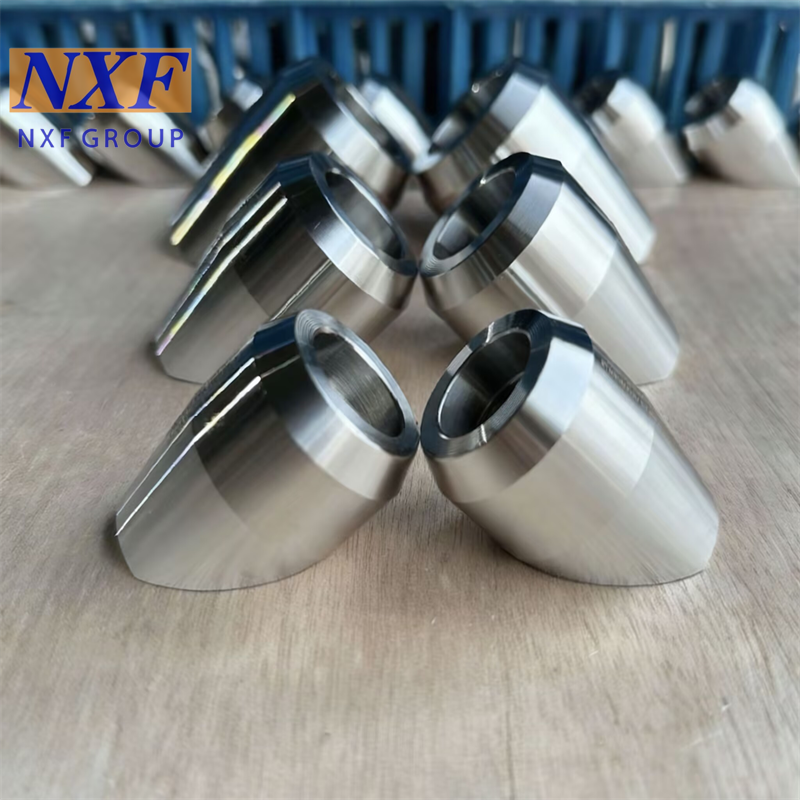

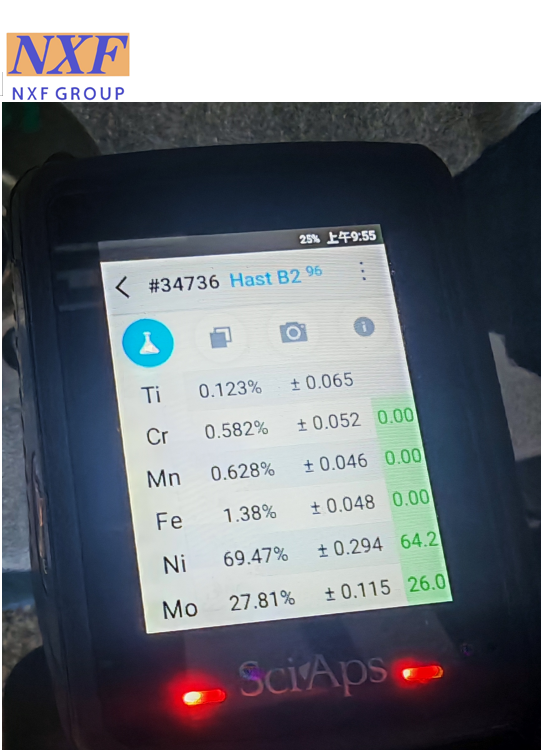


Specification
Socket Welding Latrolet Product Processing

Packing & Delivery


To better ensure the safety of your goods, professional, environmentally friendly, convenient and efficient packaging services will be provided.
Company Profile


New XiFei (SuZhou) Business Co.,Ltd is one of the leading and most respected manufacturers in China. Our products include metals, machinery, containers, construction materials, mechanical products, electrical systems, and medical accessories. Established in 1980, XIFEI has been working diligently ever since to embrace the needs of our global customer base.We work to ensure absolute customer satisfaction. Our team has dedicated itself to perfecting our three core components, "Service, Management and Craftsmanship." Our advantage as follow: 1.We have our own factory, and we can control the cost by producing by ourselves. We have a great advantage in price and can give you the lowest price. 2. We can strictly control the quality. We have production, quality inspection, warehousing and other departments to coordinate and control the quality. 3. Our biggest advantage is 3S service. Small quantity, short time, special materials.
Certificates


FAQ
1. who are we?
We are based in Jiangsu, China, start from 2021,sell to South Asia(30.00%),Eastern Asia(10.00%),Mid East(10.00%),Eastern Europe(10.00%),South America(10.00%),Domestic Market(5.00%),North America(5.00%),Northern Europe(5.00%),Central America(5.00%),Africa(5.00%),Southeast Asia(5.00%). There are total about 101-200 people in our office.
2. how can we guarantee quality?
Always a pre-production sample before mass production;
Always final Inspection before shipment;
3.what can you buy from us?
Pipe,Flange,Steel plate,Pipe fittings,Alloy products
4. why should you buy from us not from other suppliers?
Our advantage:3S Service (Small Quantity/Short Time/Special Material) We have our own factories, quality can be controlled seriously.We Specialize in manufacturing about 21 years.We have professional testing department and testing equipment.
5. what services can we provide?
Accepted Delivery Terms: FOB,CFR,CIF,EXW,FCA,DDP,DDU;
Accepted Payment Currency:USD,EUR,CAD,HKD,CNY;
Accepted Payment Type: T/T,L/C,D/P D/A,Credit Card,PayPal;
Language Spoken:English,Chinese,Spanish,Russian
Phone
+8613917160311
Whatsapp
Whatsapp
+8613917160311
Wechat
Wechat
Inquiry
Email
info@nxf-group.com
Inquiry
Inquiry
total 0 Sheet,Only 5 images can be uploaded, each less than 5m.