

Phone/Whatsapp:+8613917160311
Email: info@nxf-group.com
Email: Andrew@nxf-group.com
Email: Alice@nxf-group.com


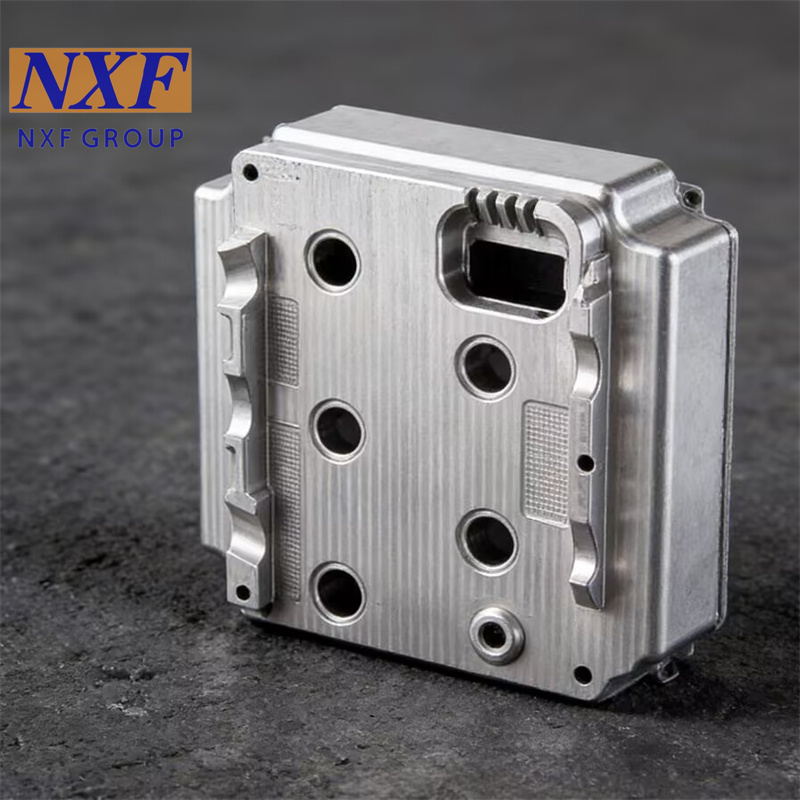
NXF UNS 316/0Cr17Ni12Mo2/1.4401 Precision Machining of Metal Parts 316 Stainless Steel CNC Mechanical Equipment Parts
CNC Auto Spare Parts are core precision components in the automotive manufacturing and repair industry. Utilizing computer numerical control (CNC) machining technology, they achieve fully automated production, precisely machining various key automotive parts such as engines, brakes, steering suspensions, transmission systems, and body structures. They meet the requirements for complex geometries and ultra-high precision machining, with tolerances accurate to the 0.005mm level, effectively avoiding human error and ensuring seamless compatibility between parts. These parts are compatible with various materials such as stainless steel, aluminum alloy, and alloy steel, supporting customized production needs. They combine high strength, corrosion resistance, and lightweight properties. Real-time data monitoring and full-process quality traceability during production significantly improve production efficiency,


CNC Milling

5-Axis CNC Machining

CNC Turning


Specification


1. who are we?
We are based in Jiangsu, China, start from 2021,sell to South Asia(30.00%),Eastern Asia(10.00%),Mid East(10.00%),Eastern Europe(10.00%),South America(10.00%),Domestic Market(5.00%),North America(5.00%),Northern Europe(5.00%),Central America(5.00%),Africa(5.00%),Southeast Asia(5.00%). There are total about 101-200 people in our office.
2. how can we guarantee quality?
Always a pre-production sample before mass production;
Always final Inspection before shipment;
3.what can you buy from us?
Pipe,Flange,Steel plate,Pipe fittings,Alloy products
4. why should you buy from us not from other suppliers?
Our advantage:3S Service (Small Quantity/Short Time/Special Material) We have our own factories, quality can be controlled seriously.We Specialize in manufacturing about 21 years.We have professional testing department and testing equipment.
5. what services can we provide?
Accepted Delivery Terms: FOB,CFR,CIF,EXW,FCA,DDP,DDU;
Accepted Payment Currency:USD,EUR,CAD,HKD,CNY;
Accepted Payment Type: T/T,L/C,D/P D/A,Credit Card,PayPal;
Language Spoken:English,Chinese,Spanish,Russian
total 0 Sheet,Only 5 images can be uploaded, each less than 5m.