
NXF GROUP

Phone/Whatsapp:+8613917160311
Email: info@nxf-group.com
Email: Andrew@nxf-group.com
Email: Alice@nxf-group.com
English
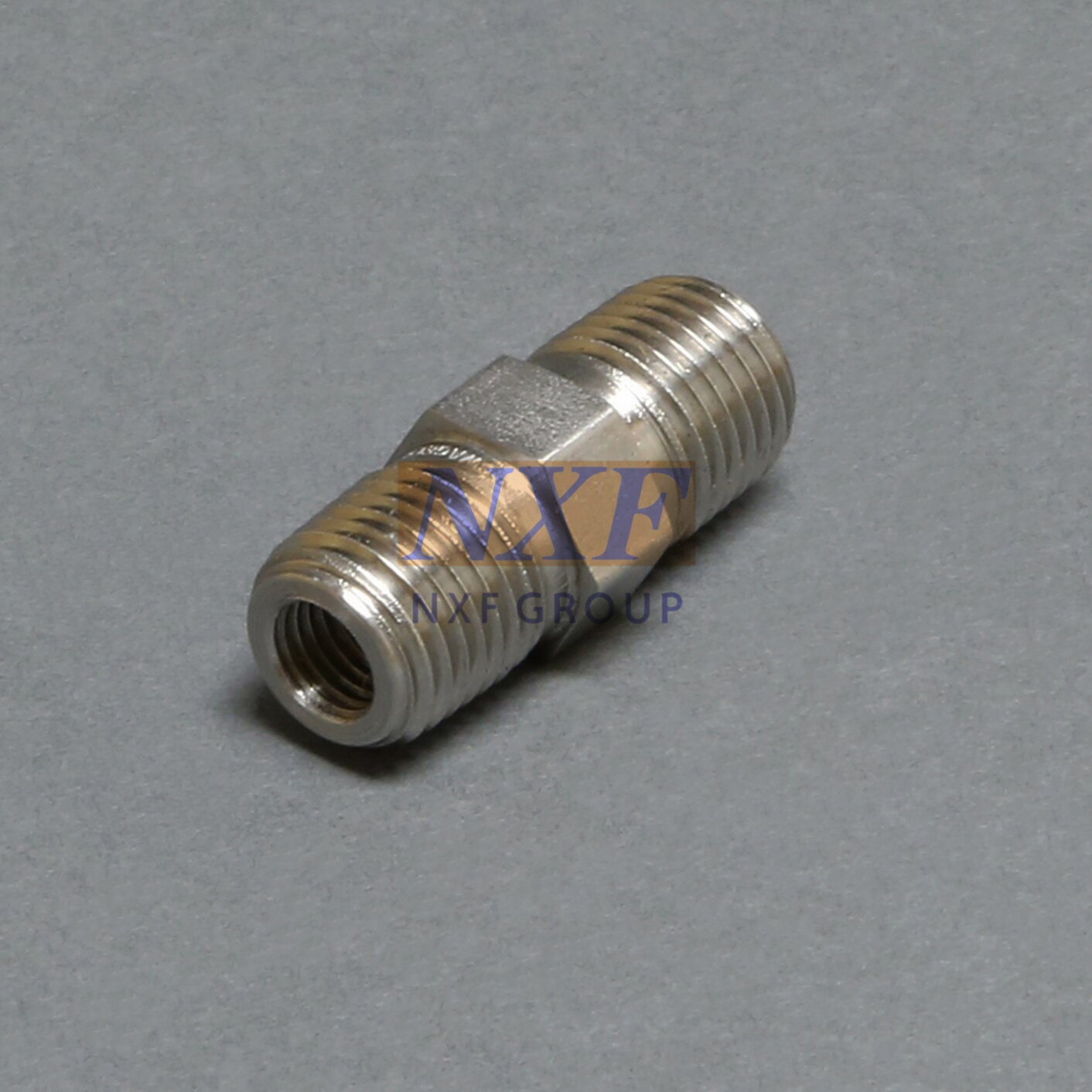
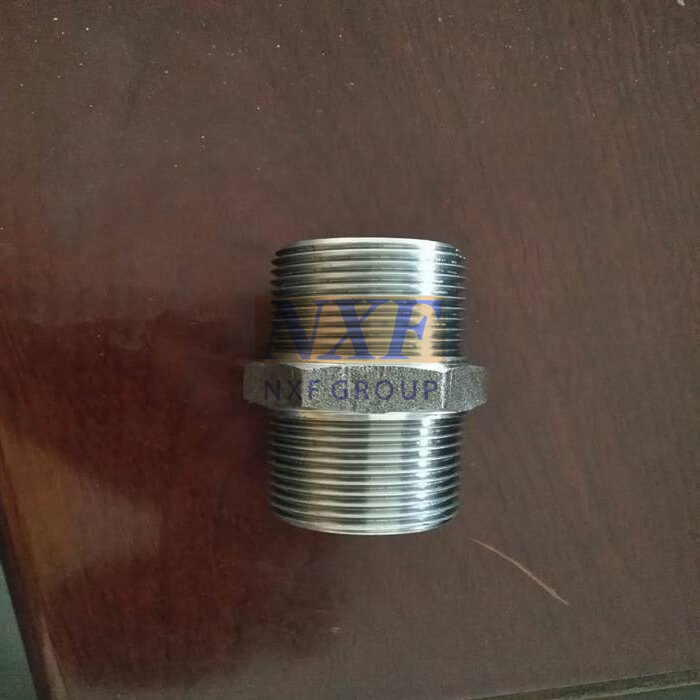
NXF ASTM A182 254SMO /F44 /S31254 /1.4547 DN15-1200 High Pressure Class3000-9000 Stainless Steel 254SMO Hexagobal Nipple
2025-06-24 16:27 NXF GROUP
17
Product Description
254SMO has good resistance to uniform corrosion. Especially in halide-containing acids, this steel is superior to ordinary stainless steel. Its C content is <0.03%, so it is called pure austenitic stainless steel (<0.01% is also called super austenitic stainless steel). Super stainless steel is a special stainless steel, which is first different from ordinary stainless steel in terms of chemical composition, and refers to a high-alloy stainless steel containing high nickel, high chromium and high molybdenum. Among them, the more famous is 254SMo containing 6% Mo, this kind of steel has very good local corrosion resistance,under the conditions of seawater, aeration, gaps, and low-speed erosion, it has good pitting resistance (PI≥40) and good stress corrosion resistance, and is a substitute material for Ni-based alloys and titanium alloys. Secondly, in terms of high temperature resistance or corrosion resistance, it has more excellent high temperature resistance or corrosion resistance, which is irreplaceable by 304 stainless steel. In addition, from the classification of stainless steel, the metallographic structure of special stainless steel is a stable austenitic metallographic structure.Because this special stainless steel is a high-alloy material, it is quite complex in the manufacturing process, and generally people can only rely on traditional processes to manufacture this special stainless steel, such as pouring,forging,calendering and so on.
Hexagonal head screws are an industrial fastener, mainly made of engineering plastics or metal materials. They have the characteristics of insulation, non-magnetic, corrosion resistance and lightweight, and are widely used in medical equipment, aerospace, electronic communications and other fields. Its products comply with standards such as GB16674.1/2 and ISO7434, support non-standard customization, cover nominal lengths from 0.2mm to 200mm, and provide a variety of surface treatment processes such as oxidation blackening and stainless steel.
254SMO Hexagonal Bushing




Specification
Packing & Delivery


Company Profile

New XiFei (SuZhou) Business Co.,Ltd is one of the leading and most respected manufacturers in China. Our products include metals,machinery, containers, construction materials, mechanical products, electrical systems, and medical accessories.Established in1980, XIFEI has been working diligently ever since to embrace the needs of our global customer base.We work to ensure absolute customer satisfaction. Our team has dedicated itself to perfecting our three core components, "Service, Management and Craftsmanship.‘
Our advantage:3S Service(Small Quantity/Short Time/Special Material)
Application Areas


FAQ
1. who are we?
We are based in Jiangsu, China, start from 2021,sell to South Asia(30.00%),Eastern Asia(10.00%),Mid East(10.00%),Eastern
Europe(10.00%),South America(10.00%),Domestic Market(5.00%),North America(5.00%),Northern Europe(5.00%),Central
America(5.00%),Africa(5.00%),Southeast Asia(5.00%). There are total about 101-200 people in our office.
2. how can we guarantee quality?
Always a pre-production sample before mass production;
Always final Inspection before shipment;
3.what can you buy from us?
Pipe,Flange,Steel plate,Pipe fittings,Alloy products
4. why should you buy from us not from other suppliers?
Our advantage:3S Service (Small Quantity/Short Time/Special Material) We have our own factories, quality can be controlled
seriously. We Specialize in manufacturing about 21 years. We have professional testing department and testing equipment.
5. what services can we provide?
Accepted Delivery Terms: FOB,CFR,CIF,EXW,FCA;
Accepted Payment Currency:USD,EUR,CAD,HKD,CNY;
Accepted Payment Type: T/T,L/C,D/P D/A;
Language Spoken:English,Chinese
6. Are you trading company or manufacturer ?
We are manufacturer.
7. How long is your delivery time?
Generally it is 5-10 days if the goods are in stock. or it is 15-20 days if the goods are not in stock, it is according to
quantity.
8. Do you provide samples ? is it free or extra ?
Yes, we could offer the sample for free charge but need pay the cost of freight.
9. What is your terms of payment ?
Payment<=1000USD, 100% in advance. Payment>=1000USD, 5
声明:此篇为NXF GROUP原创文章,转载请标明出处链接: https://www.nxf-group.com/h-nd-1036.html
Phone
+8613917160311
Whatsapp
Whatsapp
+8613917160311
Wechat
Wechat
Inquiry
Email
info@nxf-group.com
Inquiry
Inquiry