
NXF GROUP

Phone/Whatsapp:+8613917160311
Email: info@nxf-group.com
Email: Andrew@nxf-group.com
Email: Alice@nxf-group.com
English
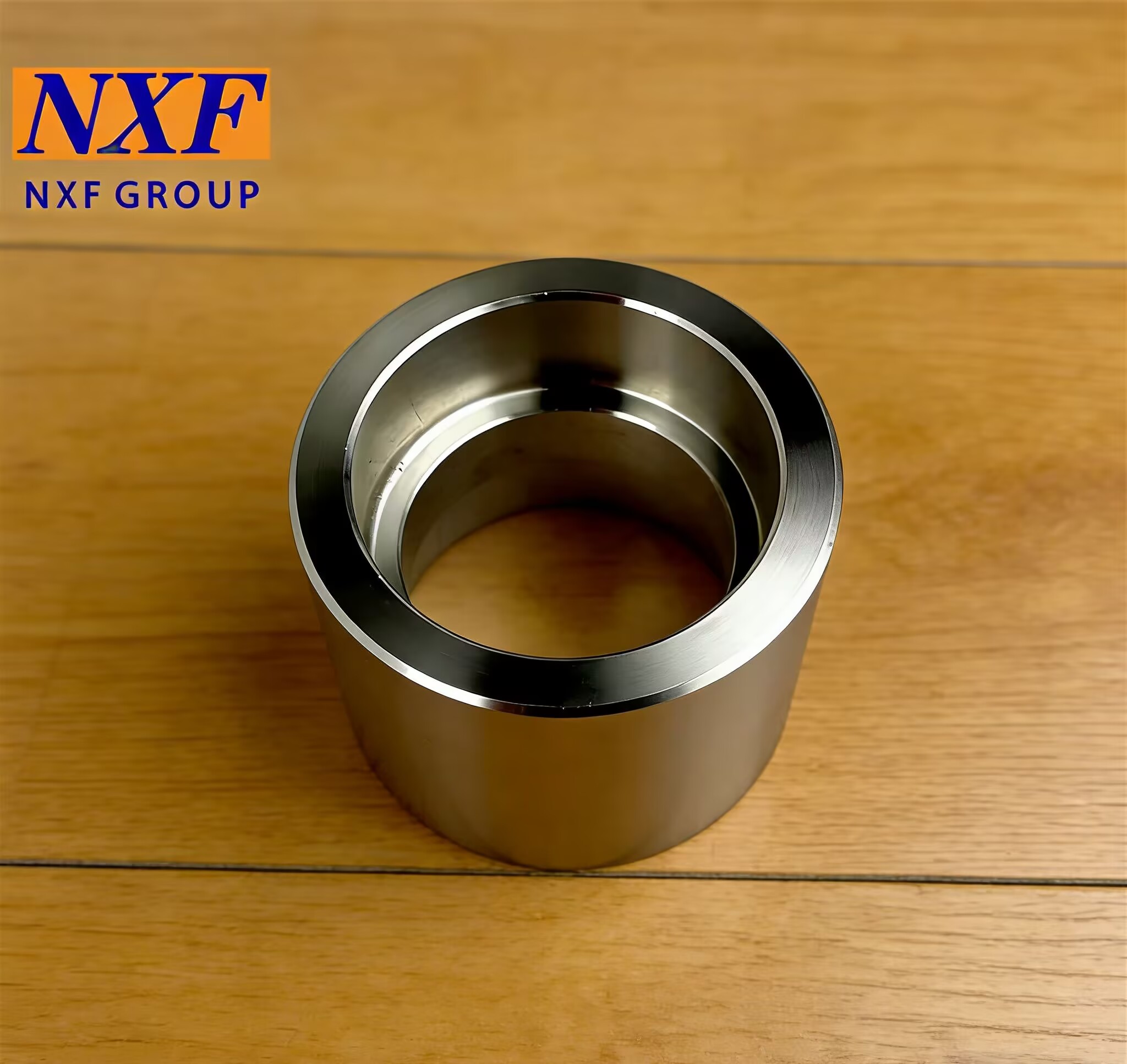
NXF UNS S13800 13-8MO Out Diameter DN15-1200 Pressure Class3000-9000 Special Stainless Steel Forged Fitting Socket Weld Coupling
2026-03-20 17:34 NCF GROUP
5
Product Description
13-8MO Introduction
13-8MO Introduction
Stainless steel grade 13-8 Mo has a high toughness and excellent resistance to stress corrosion cracking. It has been designed to handle applications where high strength, corrosion resistance, toughness, and stress resistance are essential. This is a martensitic alloy.
13-8MO Chemical Composition
13-8MO Chemical Composition
Grade 13-8 stainless steel is a high-strength, precipitation-hardening martensitic alloy known for superior toughness, corrosion resistance, and excellent transverse properties. It typically contains 12.25-13.25% Chromium, 7.5-8.5% Nickel, and 2.0-2.5% Molybdenum, often used in aerospace, nuclear, and petrochemical applications.
Introduction to common type of Socket Weld Coupling
Introduction to common type of Socket Weld Coupling
A socket weld coupling is a forged pipe fitting used to permanently join small-diameter pipes (typically NPS 2 or smaller) in high-pressure systems. It consists of a recessed socket on one or both ends, allowing the pipe to be inserted and secured with a fillet weld, offering better leak resistance than threaded Socket weld coupling is a combination of provision that can join two pipes or tubes together with a socket at one end or both ends.
They are used for their good mechanical properties in the as-cast (and therefore as-welded condition) and their excellent corrosion resistance properties (particularly to stress corrosion cracking).
Socket Weld Coupling Drawing

13-8 Mo of Chemical Composition and Mechanical Properties



Our advantage as follow:
1.We have our own factory, and we can control the cost by producing by ourselves. We have a great advantage in price and can give you the lowest price.
2. We can strictly control the quality. We have production, quality inspection, warehousing and other departments to coordinate and control the quality.
3. Our biggest advantage is 3S service. Small quantity, short time, special materials.
4.We have excellent quality certificate system and trademark certificate
3. Our biggest advantage is 3S service. Small quantity, short time, special materials.
4.We have excellent quality certificate system and trademark certificate
Product processing
1. Material Selection & Forging: High-quality steel bars are cut to size and heated, then forged into a coupling blank using dies.
2. Machining: The forged blank is machined to create the "socket" recess on both ends (full coupling) or one end (half coupling).The internal shoulder is precision-machined to ensure the pipe rests correctly, allowing a 1/16-inch (1.6mm) expansion gap.
3. Heat Treatment: To achieve required mechanical properties, the couplings undergo heat treatment, such as normalizing or quenching and tempering, depending on the material specification (e.g., ASTM A182).
4. Finishing & Inspection: The fittings are sandblasted to remove scale, then inspected for surface defects using magnetic particle or dye penetrant methods.
5. Threading/Marking: While not threaded, the finished coupling is stamped with grade, size, and rating (e.g., 3000LB, 6000LB,9000LB).
2. Machining: The forged blank is machined to create the "socket" recess on both ends (full coupling) or one end (half coupling).The internal shoulder is precision-machined to ensure the pipe rests correctly, allowing a 1/16-inch (1.6mm) expansion gap.
3. Heat Treatment: To achieve required mechanical properties, the couplings undergo heat treatment, such as normalizing or quenching and tempering, depending on the material specification (e.g., ASTM A182).
4. Finishing & Inspection: The fittings are sandblasted to remove scale, then inspected for surface defects using magnetic particle or dye penetrant methods.
5. Threading/Marking: While not threaded, the finished coupling is stamped with grade, size, and rating (e.g., 3000LB, 6000LB,9000LB).
Specification
Packing & Delivery


To better ensure the safety of your goods, professional, environmentally friendly, convenient and efficient packaging services will be provided.
Company Profile

New XiFei (SuZhou) Business Co.,Ltd is one of the leading and most respected manufacturers in China. Our products include metals,machinery, containers, construction materials, mechanical products, electrical systems, and medical accessories. Established in1980, XIFEI has been working diligently ever since to embrace the needs of our global customer base.We work to ensure absolutecustomer satisfaction. Our team has dedicated itself to perfecting our three core components, "Service, Management and Craftsmanship." Our advantage as follow: 1.We have our own factory, and we can control the cost by producing by ourselves. We have a great advantage in price and can give you the lowest price. 2. We can strictly control the quality. We have production, quality inspection, warehousing and other departments to coordinate and control the quality. 3. Our biggest advantage is 3S service. Small quantity, short time, special materials.
Our advantage:3S Service(Small Quantity/Short Time/Special Material)
Certification


FAQ
1. who are we?
We are based in Jiangsu, China, start from 2021,sell to South Asia(30.00%),Eastern Asia(10.00%),Mid East(10.00%),Eastern
Europe(10.00%),South America(10.00%),Domestic Market(5.00%),North America(5.00%),Northern Europe(5.00%),Central
America(5.00%),Africa(5.00%),Southeast Asia(5.00%). There are total about 101-200 people in our office.
2. how can we guarantee quality?
Always a pre-production sample before mass production;
Always final Inspection before shipment;
3.what can you buy from us?
Pipe,Flange,Steel plate,Pipe fittings,Alloy products
4. why should you buy from us not from other suppliers?
Our advantage:3S Service (Small Quantity/Short Time/Special Material) We have our own factories, quality can be controlled seriously. We Specialize in manufacturing about 21 years. We have professional testing department and testing equipment.
5. what services can we provide?
Accepted Delivery Terms: FOB,CFR,CIF,EXW,FCA;
Accepted Payment Currency:USD,EUR,CAD,HKD,CNY;
Accepted Payment Type: T/T,L/C,D/P D/A;
Language Spoken:English,Chinese
6. Are you trading company or manufacturer ?
We are manufacturer.
7. How long is your delivery time?
Generally it is 5-10 days if the goods are in stock. or it is 15-20 days if the goods are not in stock, it is according to
quantity.
8. Do you provide samples ? is it free or extra ?
Yes, we could offer the sample for free charge but need pay the cost of freight.
9. What is your terms of payment ?
Payment<=1000USD, 100% in advance. Payment>=1000USD, 50% T/T in advance ,balance before shippment.
We are based in Jiangsu, China, start from 2021,sell to South Asia(30.00%),Eastern Asia(10.00%),Mid East(10.00%),Eastern
Europe(10.00%),South America(10.00%),Domestic Market(5.00%),North America(5.00%),Northern Europe(5.00%),Central
America(5.00%),Africa(5.00%),Southeast Asia(5.00%). There are total about 101-200 people in our office.
2. how can we guarantee quality?
Always a pre-production sample before mass production;
Always final Inspection before shipment;
3.what can you buy from us?
Pipe,Flange,Steel plate,Pipe fittings,Alloy products
4. why should you buy from us not from other suppliers?
Our advantage:3S Service (Small Quantity/Short Time/Special Material) We have our own factories, quality can be controlled seriously. We Specialize in manufacturing about 21 years. We have professional testing department and testing equipment.
5. what services can we provide?
Accepted Delivery Terms: FOB,CFR,CIF,EXW,FCA;
Accepted Payment Currency:USD,EUR,CAD,HKD,CNY;
Accepted Payment Type: T/T,L/C,D/P D/A;
Language Spoken:English,Chinese
6. Are you trading company or manufacturer ?
We are manufacturer.
7. How long is your delivery time?
Generally it is 5-10 days if the goods are in stock. or it is 15-20 days if the goods are not in stock, it is according to
quantity.
8. Do you provide samples ? is it free or extra ?
Yes, we could offer the sample for free charge but need pay the cost of freight.
9. What is your terms of payment ?
Payment<=1000USD, 100% in advance. Payment>=1000USD, 50% T/T in advance ,balance before shippment.
声明:此篇为NXF GROUP原创文章,转载请标明出处链接: https://www.nxf-group.com/h-nd-1874.html
Phone
+8613917160311
Whatsapp
Whatsapp
+8613917160311
Wechat
Wechat
Inquiry
Email
info@nxf-group.com
Inquiry
Inquiry