

Phone/Whatsapp:+8613917160311
Email: info@nxf-group.com
Email: Andrew@nxf-group.com
Email: Alice@nxf-group.com
NXF UNS N06600 DIN2.4816 Alloy 600 OD DN6-DN1200 Thickness Sch10-XXS Nickel Alloy Fitting BW Eccentric/Concentric Reducer
UNS N06600 DIN2.4816 Alloy 600 Nickel alloy Introduction
The machining properties of UNS N06600 DIN2.4816 Alloy 600 are similar to other nickel-based alloys; however, due to its high work hardening rate and high toughness, lower machining speeds, higher power, and higher rigidity are required. Coated carbide cutting tools are recommended.
Forming
The nickel-based alloy UNS N06600 DIN2.4816 Alloy 600 can be formed using the same methods as other nickel-based alloys. Forming and forging of this alloy require higher power. Forging temperature range: 871-1093°C (1600-2000°F).
Welding
Nickel-based alloy UNS N06600 DIN2.4816 Alloy 600 can be welded using conventional welding processes. UNS N06082 (AWS ERNiCr-3) is recommended as the welding wire.
Exercise caution should be exercised when using self-fluxing, high-power-density welding processes (such as electron beam welding or laser welding), as excessive grain coarsening and intergranular embrittlement may occur.
Heat Treatment
Final annealing is suitable for a variety of applications, with an annealing temperature of 1093°C (2000°F) followed by air
cooling. If this material is intended for use in harsh high-temperature oxidizing environments, annealing should be performed at 1149°C (2100°F). This alloy cannot be hardened by heat treatment.
BW Concentric/Eccentric Reducer
diameters. Butt-weld reducers are divided into concentric reducers (where the center axes of the larger and smaller ends coincide) and eccentric reducers (where one side of the outer wall of the larger and smaller ends is in a straight line).
Concentric reducing pipe, also known as concentric reducer, is a type of steel butt-welded pipe fitting. Its shape resembles a tapered joint and is used to increase or decrease the diameter along the centerline. It facilitates the transportation of slurry and grinding fluids, is suitable for corrosive operations, and is also beneficial in applications requiring different ratings and wear protection when conveying between flanges or pipes. The midpoint of the nozzles at both ends of the reducer lies on the same axis. Therefore, when changing the pipe diameter, the interference with the fluid flow pattern is minimal, which is advantageous for fluid flow and is suitable for altering the diameter of gas or vertical liquid pipes.
The eccentric reducer, also known as an eccentric pipe fitting, is used quite frequently because it ensures that the top or bottom of the pipe maintains the same elevation before and after the diameter change, which facilitates support. Sometimes, to prevent liquid accumulation at the diameter transition, a concentric reducer is used instead. One end of the eccentric reducer is flat.When changing diameters, the position and direction of the cutting point will differ. Therefore, the installation and function of the eccentric reducer are different. Specifically: when the cutting point of the nozzle faces upward, it is called top installation, which is usually used at the pump inlet and helps with venting. When the cutting point is positioned downward, it is typically used for regulating valve installation and drainage. In general, horizontal liquid pipes usually use eccentric reducers.
BW Concentric/Eccentric Reducer Drawing


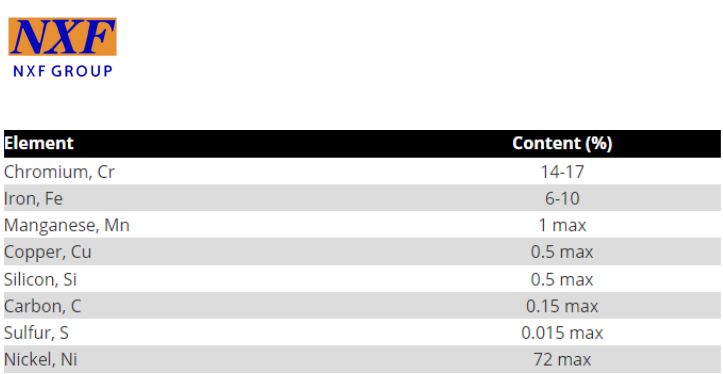
Alloy 600 Chemical Composition And Mechanical Properties

Product Image


Spectral detection
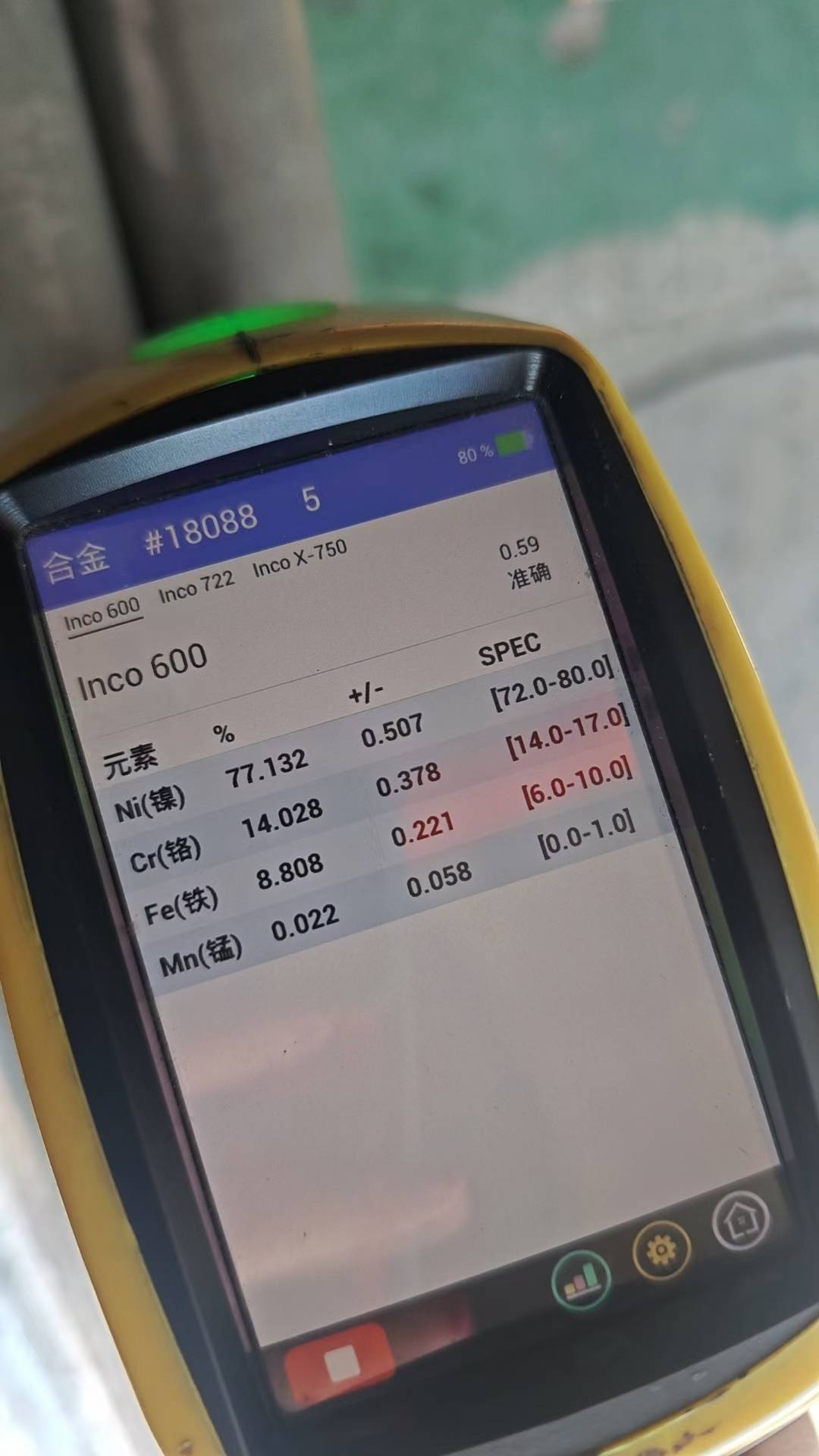
2. We can strictly control the quality. We have production, quality inspection, warehousing and other departments to coordinate and control the quality.Such as PMI testing
3. Our biggest advantage is 3S service. Small quantity, short time, special materials.
4.We have excellent quality certificate system and trademark certificate
5.We have a comprehensive after-sales service guarantee, such as the transaction guarantee provided by Alibaba International Station, as well as remote technical guidance and services.
6.We have a well-established logistics support system that can save you both time and money, providing you with a one-stop service.
Reducer Produce Processing
segment length is equal to or slightly greater than the height of the finished reducer. Grind the excess height of the weld seam on the welded pipe billet flush with the base material.
3. Press forming: Vertically place the heated tube billet with the hot end downward into a mold with the large end facing upward. Start the press slider to press the billet until the end is flush with the mold, and the heated part is necked along the inner wall of the mandrel. Then, the mold is lifted and flipped upside down by the press slider using iron chains, pushing the billet into the corresponding workstation tool. After that, use a steel pipe with the same diameter as the small end of the reducer to push the formed reducer out of the mandrel using the press slider, completing the forming of the reducer.
4. End shaping: According to process specifications, cut off the excess parts of the reducer pipe at both ends while leaving a certain machining allowance, then heat both pipe ends and shape them on a hydraulic press to achieve the requirements for machining the pipe end bevel.
longitudinal seams of seam pipes pressed into reducer pipes. Defective areas exceeding the standard are repaired according to the qualified weld repair procedure, and the same area shall not be repaired more than twice.
6. Heat treatment: Perform the corresponding heat treatment according to the material's heat treatment process specifications, so that the crystal structure inside the product, which was distorted or damaged due to extrusion forming and thermal processing, is restored to the original material's structure, ensuring that the finished reducer has the same performance state as the original material. After treatment, conduct surface hardness tests on each reducer individually.
8. Finished Product Inspection: The finished reducer pipes that have passed process flow inspections are fully measured on the testing platform for appearance, dimensions, and geometric deviations. Products that pass the dimensional measurements undergo comprehensive non-destructive testing.


Our advantage as follow:
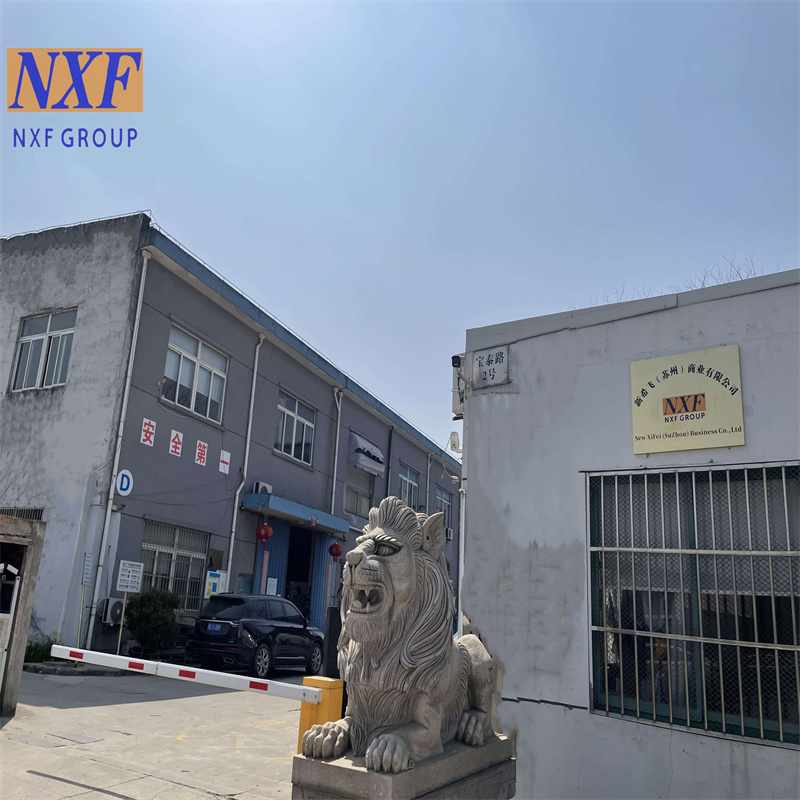
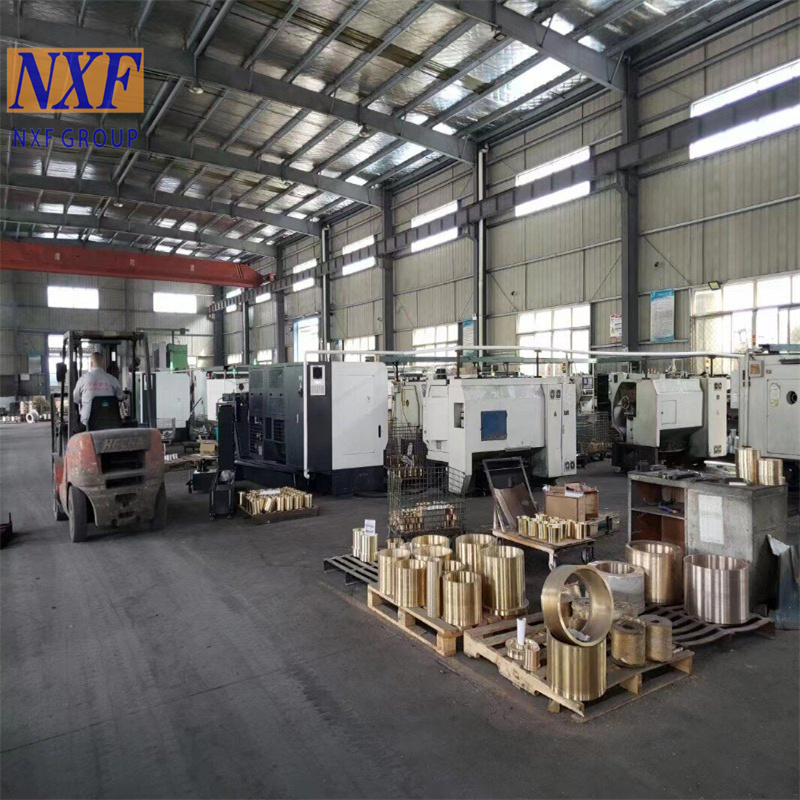
1.We have our own factory, and we can control the cost by producing by ourselves. We have a great advantage in price and can give you the lowest price.
2. We can strictly control the quality. We have production, quality inspection, warehousing and other departments to coordinate and control the quality.Such as PMI testing
3. Our biggest advantage is 3S service. Small quantity, short time, special materials.
4.We have excellent quality certificate system and trademark certificate
5.We have a comprehensive after-sales service guarantee, such as the transaction guarantee provided by Alibaba International Station, as well as remote technical guidance and services.
6.We have a well-established logistics support system that can save you both time and money, providing you with a one-stop service.

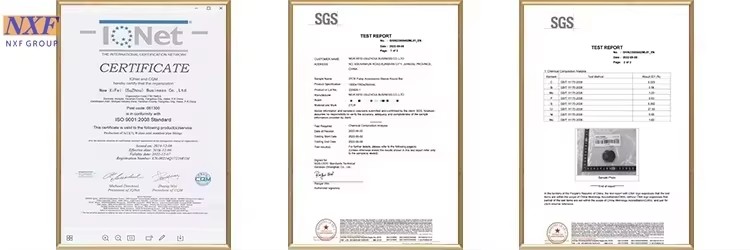
Chinese Trademark Certificate


Europass Certificate

1. who are we? We are based in Jiangsu, China, start from 2021,sell to South Asia(30.00%),Eastern Asia(10.00%),Mid
East(10.00%),Eastern Europe(10.00%),South America(10.00%),Domestic Market(5.00%),North America(5.00%),Northern
Europe(5.00%),Central America(5.00%),Africa(5.00%),Southeast Asia(5.00%). There are total about 101-200 people in our office.
2.how can we guarantee quality?
Always a pre-production sample before mass production;
Always final Inspection before shipment;
3.what can you buy from us?
Pipe,Flange,Steel plate,Pipe fittings,Alloy products
4. why should you buy from us not from other suppliers?
Our advantage:3S Service (Small Quantity/Short Time/Special Material)
We have our own factories, quality can be controlled seriously.
We Specialize in manufacturing about 21 years.
We have professional testing department and testing equipment.
5. what services can we provide?
Accepted Delivery Terms: FOB,CFR,CIF,EXW,FCA,DDP,DDU;
Accepted Payment Currency:USD,EUR,CAD,HKD,CNY;
Accepted Payment Type: T/T,L/C,D/P D/A,Credit Card,PayPal;
LanguageSpoken:English,Chinese,Spanish,Russian.