

Phone/Whatsapp:+8613917160311
Email: info@nxf-group.com
Email: Andrew@nxf-group.com
Email: Alice@nxf-group.com
NXF UNS S3040 304/1.4301 OD DN6-DN1200 Pressure 3000-9000lb Special Stainless Steel Forging Fitting Threaded Flush Bushing
UNS S3040 304/1.4301 Stainless Steel Introduction
Machinability
Stainless steel grade UNS S30400 304/1.4301 has machinability characteristics that are typical of standard austenitic stainless steels; however it requires consistent cutting speeds, sufficient feed rates, and high machine rigidity due to its moderate work hardening rate during machining. It is recommended that sharp, wear-resistant carbide tooling optimized for austenitic stainless steels be used.
Forming
Stainless steel grade UNS S30400 304/1.4301 can be formed using the same conventional cold and hot forming methods applied for other austenitic stainless steels. It has excellent ductility, requiring lower forming force than high-alloy austenitic grades,and is highly adaptable to deep drawing, bending and stamping processes. Hot forging can be done at 1150-1260°C (2100-2300°F).
Welding
Welding of stainless steel grade UNS S30400 304/1.4301 can be performed using all traditional fusion and resistance joining processes. Recommended filler metal should be AWS E308L/ER308L for most general applications.
Caution should be taken while using autogenous welding for thick sections (over 6mm) or components serving in strongly corrosive environments, due to the risk of chromium carbide precipitation and reduced intergranular corrosion resistance in the heat-affected zone; post-weld solution annealing is recommended for these critical scenarios.
Heat Treatment
Final solution annealing process performed for optimal performance in most applications, is done at 1010-1100°C
(1850-2010°F),which is followed by rapid water quenching. In case this material is used in a strongly corrosive
environment,annealing should be done at the upper end of the temperature range (1060-1100°C / 1940-2010°F) to ensure full carbide dissolution.This austenitic alloy cannot be hardened by thermal heat treatment, only through cold working.
Threaded Flush Bushing Introduction
With a flush and slim profile, this fitting is ideal for installation in narrow, confined spaces. It is widely applied in
industrial piping systems, fluid transmission lines and mechanical equipment, delivering durable, leak-proof performance in demanding working environments.
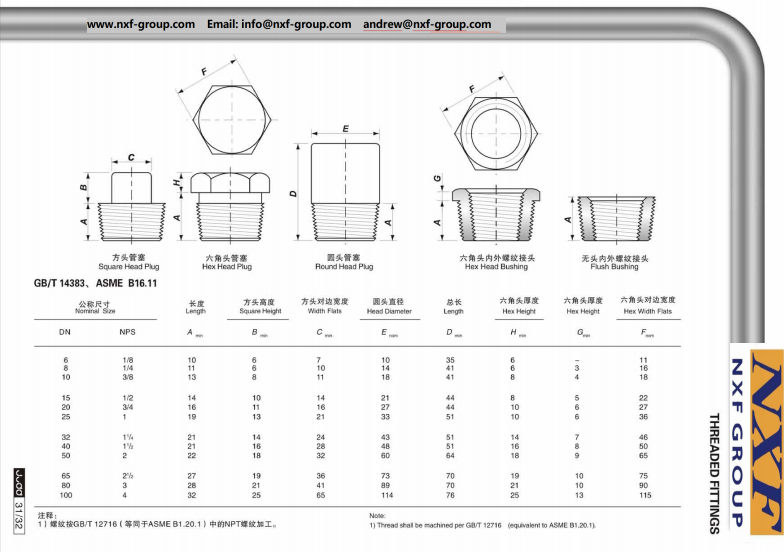
Threaded Flush Bushing Drawing
UNS S3040 304/1.4301 Chemical And Mechanical Properties


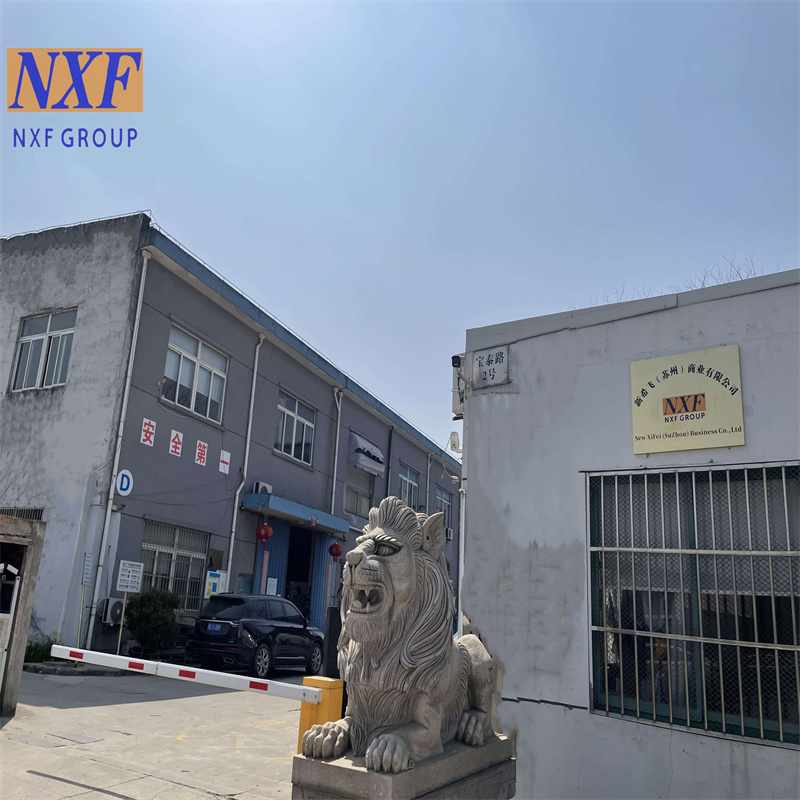
Product Image


Spectral detection PMI Testing

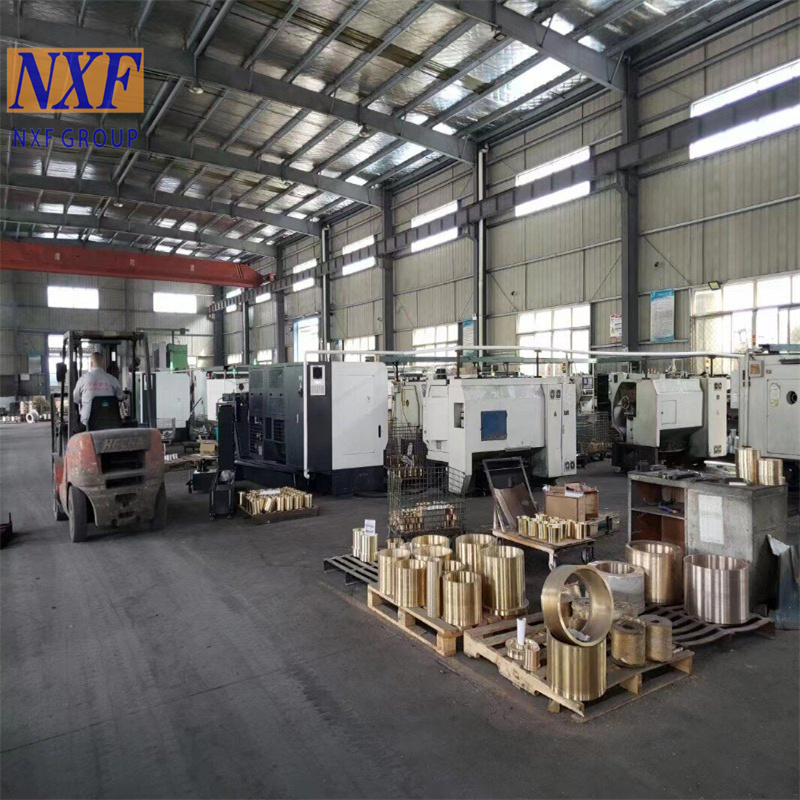
Threaded Flush Bushing Produce Processing
dimensional consistency.
with compact internal structure and stable mechanical performance.
Machine full continuous external threads on the outer wall and full continuous internal threads on the inner bore. All threads are formed at one time, with sharp tooth profile, no burrs and no smooth surface.
Inspection Conduct full inspection of thread size, outer diameter, inner diameter and length to ensure all products meet the
standard specifications.
damage during transportation and storage.
2. We can strictly control the quality. We have production, quality inspection, warehousing and other departments to coordinate and control the quality.Such as PMI testing
3. Our biggest advantage is 3S service. Small quantity,short time, special materials.
4.We have excellent quality certificate system and trademark certificate
5.We have a comprehensive after-sales service guarantee, such as the transaction guarantee provided by Alibaba International Station, as well as remote technical guidance and services.
6.We have a well-established logistics support system that can save you both time and money,providing you with a one-stop service.
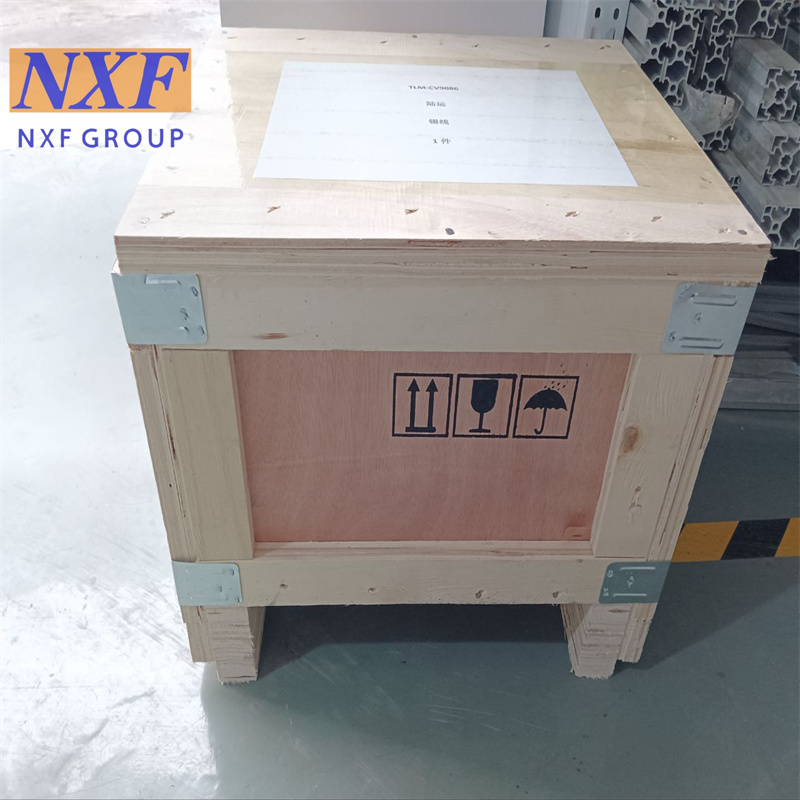


Our advantage as follow:
1.We have our own factory, and we can control the cost by producing by ourselves. We have a great advantage in price and can give you the lowest price.
2. We can strictly control the quality. We have production, quality inspection, warehousing and other departments to coordinate and control the quality.Such as PMI testing
3. Our biggest advantage is 3S service. Small quantity, short time, special materials.
4.We have excellent quality certificate system and trademark certificate
5.We have a comprehensive after-sales service guarantee, such as the transaction guarantee provided by Alibaba
International Station, as well as remote technical guidance and services.
6.We have a well-established logistics support system that can save you both time and money, providing you with a one-stop service.

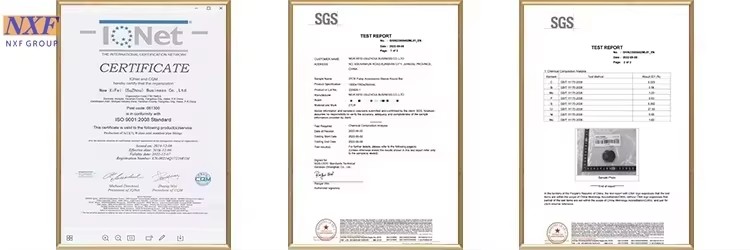
Chinese Trademark Certificate


European certificate

1. who are we? We are based in Jiangsu, China, start from 2021,sell to South Asia(30.00%),Eastern Asia(10.00%),Mid
East(10.00%),Eastern Europe(10.00%),South America(10.00%),Domestic Market(5.00%),North America(5.00%),Northern
Europe(5.00%),Central America(5.00%),Africa(5.00%),Southeast Asia(5.00%). There are total about 101-200 people in our office.
2.how can we guarantee quality?
Always a pre-production sample before mass production;
Always final Inspection before shipment;
3.what can you buy from us?
Pipe,Flange,Steel plate,Pipe fittings,Alloy products
4. why should you buy from us not from other suppliers?
Our advantage:3S Service (Small Quantity/Short Time/Special Material)
We have our own factories, quality can be controlled seriously.
We Specialize in manufacturing about 21 years.
We have professional testing department and testing equipment.
5. what services can we provide?
Accepted Delivery Terms: FOB,CFR,CIF,EXW,FCA,DDP,DDU;
Accepted Payment Currency:USD,EUR,CAD,HKD,CNY;
Accepted Payment Type: T/T,L/C,D/P D/A,Credit Card,PayPal;
LanguageSpoken:English,Chinese,Spanish,Russian