

Phone/Whatsapp:+8613917160311
Email: info@nxf-group.com
Email: Andrew@nxf-group.com
Email: Alice@nxf-group.com
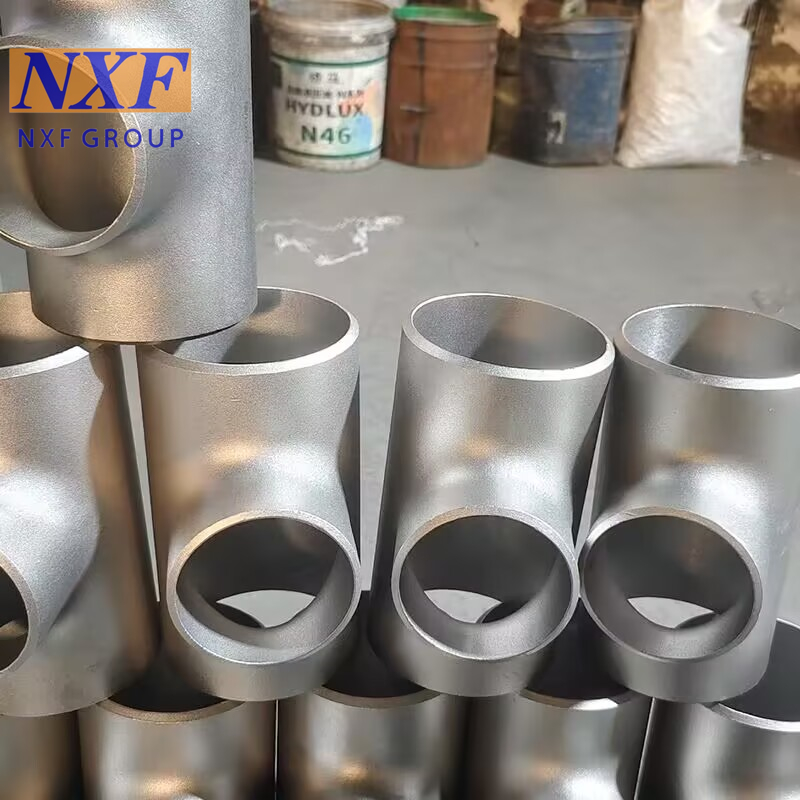
NXF UNS S33400/Incoloy 840/ASTM A240/ASME SA-240/NAS H840 DN15-1200 SCH10-XXS Butt Welding Straight or Reducing Tee


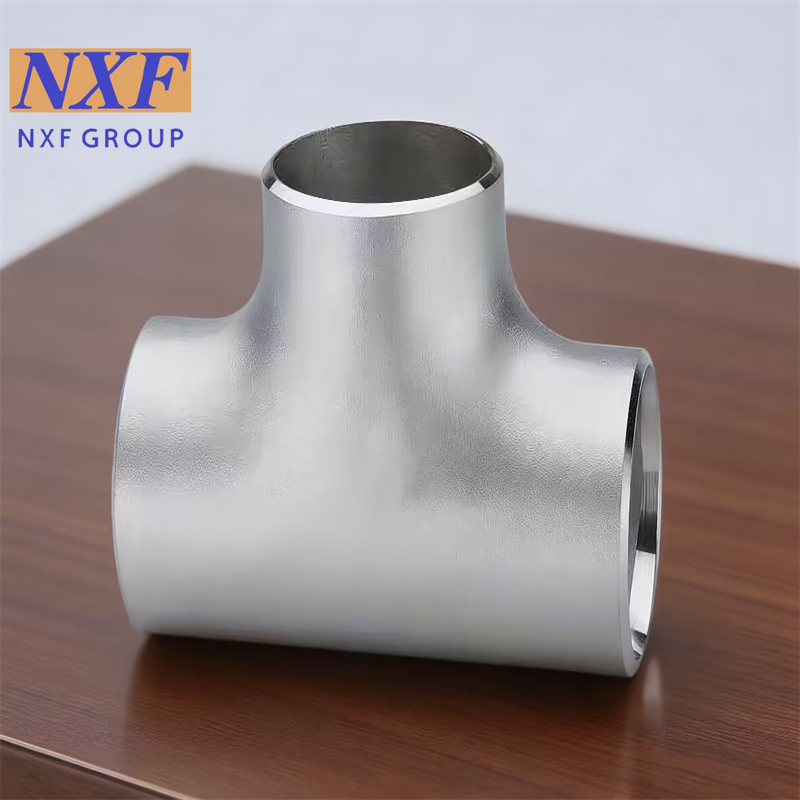
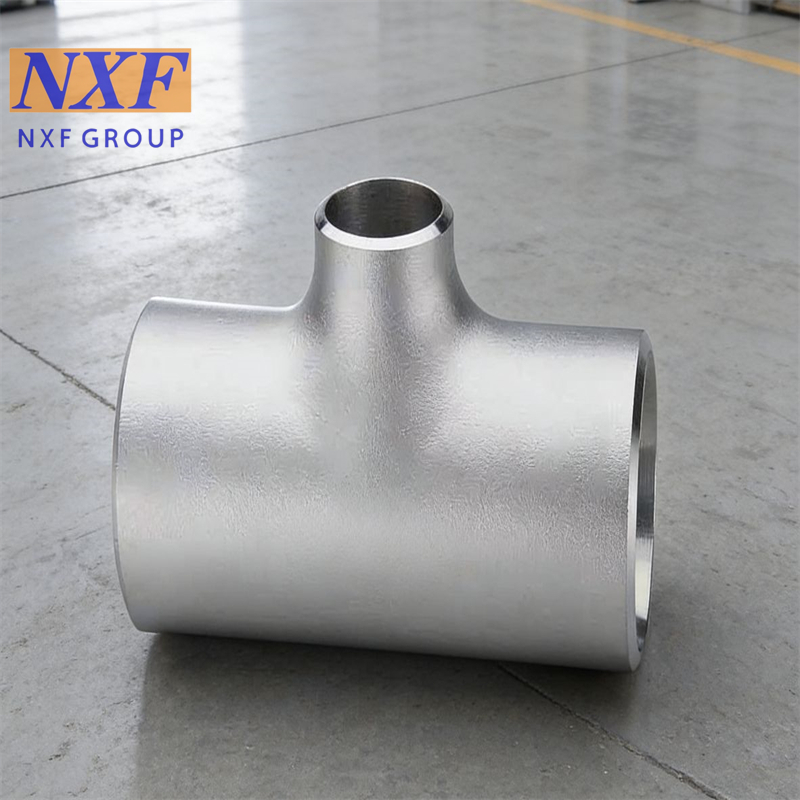
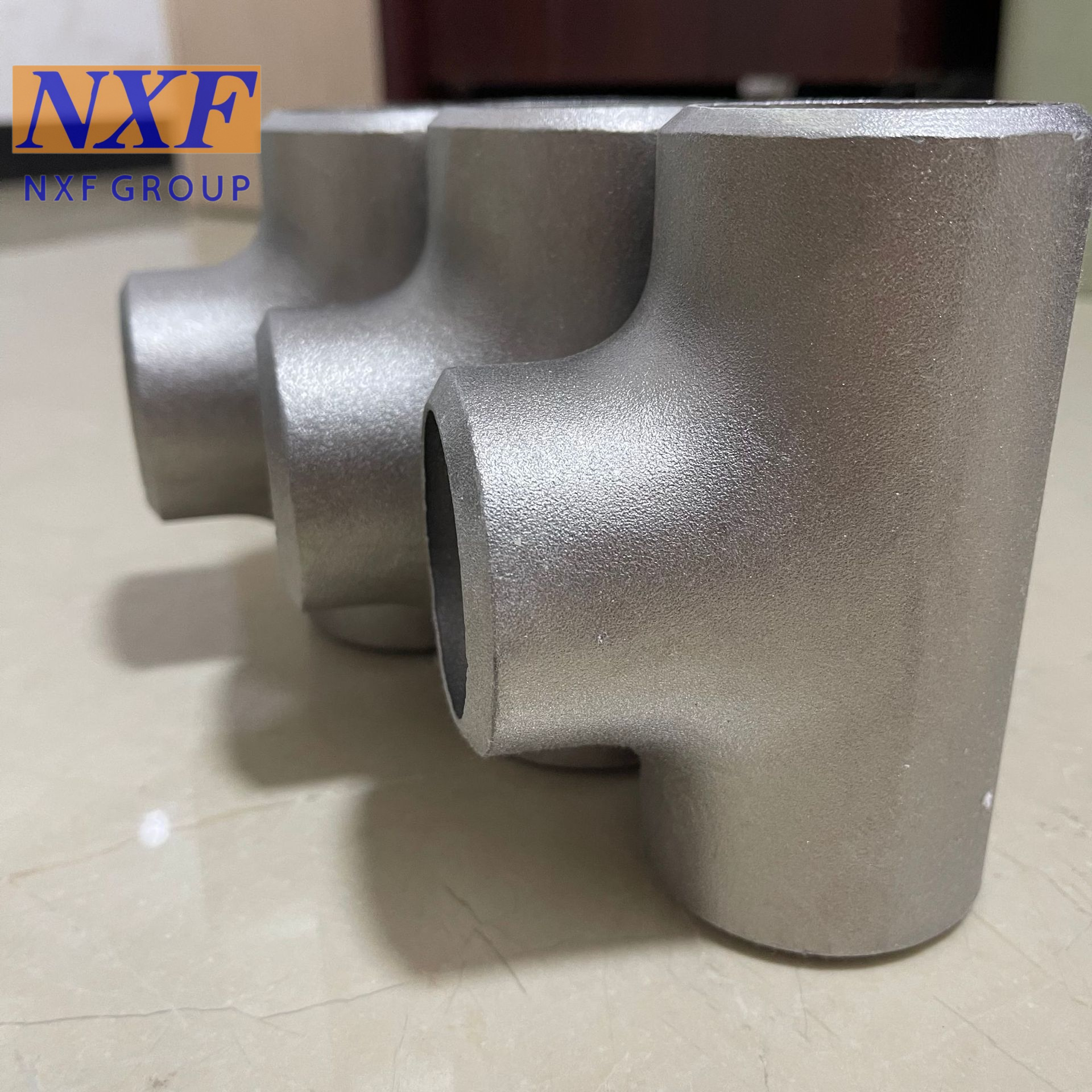
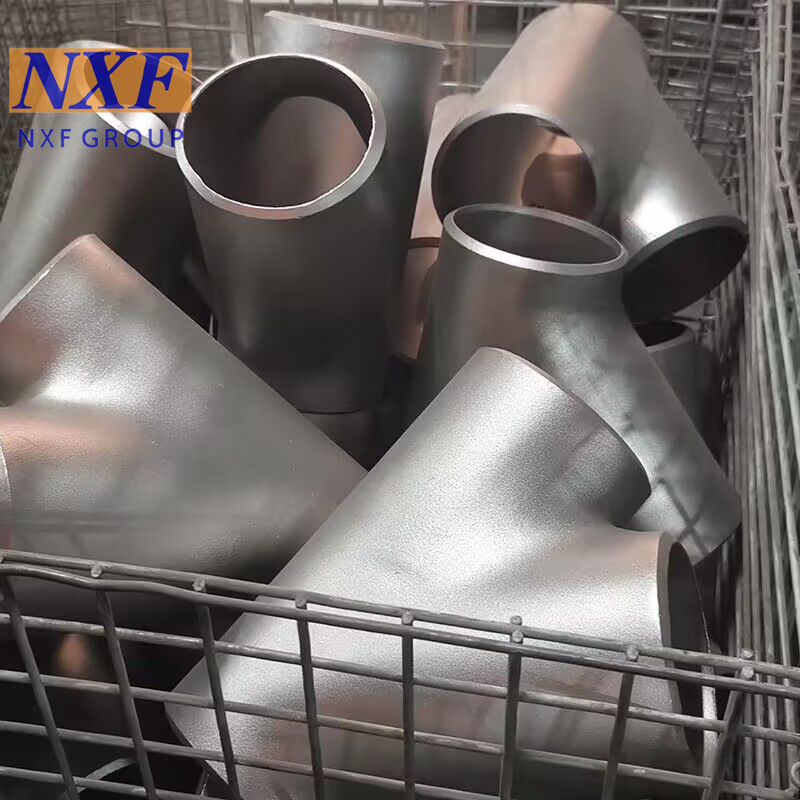


1. Raw Material Preparation & Inspection
Material Selection: Select certified Incoloy 840 alloy seamless pipes or forgings that meet the standard (such as ASTM B409), with clear material certificates including chemical composition (Cr: 19%-23%, Ni: 32%-36%, Fe: balance, etc.) and mechanical property data.
Pre-inspection: Conduct non-destructive testing (NDT) on raw materials, including ultrasonic testing (UT) to check internal defects, and visual inspection (VI) to eliminate surface cracks, pits, and scratches.
Cutting: According to the size of the tee (nominal diameter, wall thickness), use a CNC cutting machine to cut the pipe/forging into blanks of specified length, ensuring flat cutting surfaces and no burrs.
2. Forming Process (Two Main Methods)
Method A: Hot Forming (For Large Diameter & Thick Wall Tees)
Heating: Put the blank into a medium-frequency induction heating furnace, heat it to the temperature range of 1150°C-1200°C, and keep the temperature for 30-60 minutes according to the thickness of the blank to ensure uniform internal and external temperature of the material.
Press Forming: Place the heated blank on a special tee forming mold (including upper mold, lower mold and branch pipe punch). Start the hydraulic press, and the punch extrudes the blank to form the branch pipe part of the tee. The main pipe part is shaped by the mold cavity. Control the pressing speed and pressure to avoid excessive deformation and cracking of the alloy.
Cooling: Cool the formed tee to room temperature in the air (avoid rapid water cooling to prevent thermal stress cracking).
Method B: Cold Forming (For Small Diameter & Thin Wall Tees)
Blanking & Annealing: Cut the raw material pipe into blanks, and perform annealing treatment (850°C-900°C, heat preservation 1-2h, air cooling) to reduce the hardness of Incoloy 840 and improve its cold working performance.
Cold Extrusion: Use a cold extrusion machine and precision mold to extrude the branch pipe of the tee at room temperature. Lubricate the mold and blank surface with a special lubricant to reduce friction and avoid surface scratches.
Sizing: Use a sizing mold to correct the outer diameter, wall thickness and roundness of the formed tee to meet the dimensional tolerance requirements.
3. Heat Treatment
Solution Annealing: Put the formed tee into a heat treatment furnace, heat to 1040°C-1150°C, keep the temperature for 1-2 hours (adjust according to the size), and then cool it with air or water. This step can eliminate the internal stress generated during forming, restore the alloy's corrosion resistance and mechanical properties, and refine the grain structure.
Stress Relief Annealing (Optional): For tees with high precision requirements, perform stress relief annealing at 600°C-700°C after solution treatment to further reduce residual stress.
4. Machining & Finishing
Trimming: Use a CNC lathe to cut the excess burrs, flash and uneven parts at the inlet and outlet of the tee and the branch pipe end, ensuring that the end face is perpendicular to the center line of the pipe.
Dimensional Machining: Machine the inner and outer diameters, wall thickness and length of the tee according to the drawing requirements to ensure that the dimensions meet the standard (such as ASME B16.9).
Surface Treatment: Polish the surface of the tee with abrasive tools to remove oxide scale and machining marks, and make the surface roughness meet the technical requirements (usually Ra ≤ 3.2μm).
5. Quality Inspection
Dimensional Inspection: Use a vernier caliper, micrometer, coordinate measuring machine (CMM) to detect the nominal diameter, wall thickness, length, angle of the tee and other dimensions, and record the data.
Non-Destructive Testing: Re-test the tee after processing:
Ultrasonic Testing (UT): Check internal defects of the weld and base material.
Radiographic Testing (RT): For welded tees, check the quality of the weld joint.
Penetrant Testing (PT): Check surface defects such as cracks and pinholes.
Mechanical Property Sampling Inspection: Randomly select samples from the same batch of tees for tensile test, hardness test and corrosion resistance test to verify that the performance meets the standard.
Material Certification Confirmation: Issue a quality certificate for each batch of tees, which is consistent with the raw material certificate and inspection data.
6. Marking & Packaging
Marking: Mark the key information on the surface of the tee by stamping or laser marking, including: material grade (Incoloy 840), nominal diameter, wall thickness, standard number, heat treatment batch number, manufacturer logo and production date.
Packaging: Wrap each tee with anti-rust paper or plastic film, and put it into a wooden case with a moisture-proof layer. Fill the gap with foam to prevent collision and damage during transportation. Attach the quality certificate and packing list to the case.


1. who are we?
We are based in Jiangsu, China, start from 2021,sell to South Asia(30.00%),Eastern Asia(10.00%),Mid East(10.00%),Eastern Europe(10.00%),South America(10.00%),Domestic Market(5.00%),North America(5.00%),Northern Europe(5.00%),Central America(5.00%),Africa(5.00%),Southeast Asia(5.00%). There are total about 101-200 people in our office.
2. how can we guarantee quality?
Always a pre-production sample before mass production;
Always final Inspection before shipment;
3.what can you buy from us?
Pipe,Flange,Steel plate,Pipe fittings,Alloy products
4. why should you buy from us not from other suppliers?
Our advantage:3S Service (Small Quantity/Short Time/Special Material) We have our own factories, quality can be controlled seriously.We Specialize in manufacturing about 21 years.We have professional testing department and testing equipment.
5. what services can we provide?
Accepted Delivery Terms: FOB,CFR,CIF,EXW,FCA,DDP,DDU;
Accepted Payment Currency:USD,EUR,CAD,HKD,CNY;
Accepted Payment Type: T/T,L/C,D/P D/A,Credit Card,PayPal;
Language Spoken:English,Chinese,Spanish,Russian