

Phone/Whatsapp:+8613917160311
Email: info@nxf-group.com
Email: Andrew@nxf-group.com
Email: Alice@nxf-group.com
NXF ASTM A358 S38815/ZeCor-Z/ZeCor-310M OD DN15-1200 Class3000-9000 Special Stainless Steel Forged Fitting Thread Union
ZeCor-310M Introduction
Thread Union Introduction
This fitting is forged from ZeCor310M. It has excellent hightemperature resistance, oxidation resistance, corrosion resistance and good creep resistance, and can work stably for a long time under severe service conditions such as high-temperature flue gas, heat treatment furnace pipelines and high-temperature process media.
Both ends are tapered pipe threads, normally NPT threads, which can be screwed directly with threaded pipes. Tighten the union nut to compress the sealing surface for reliable sealing. Its core advantage is easy disassembly without pipe cutting during maintenance. It is widely used for instrument piping and lines requiring frequent disassembly. It covers pressure classes of 2000LB, 3000LB and 6000LB, sizes ranging from 1/8″ to 4″ (DN6-DN100). It is widely used in petrochemical, energy, metallurgy, high-temperature instrument sampling lines and high-temperature process piping systems.


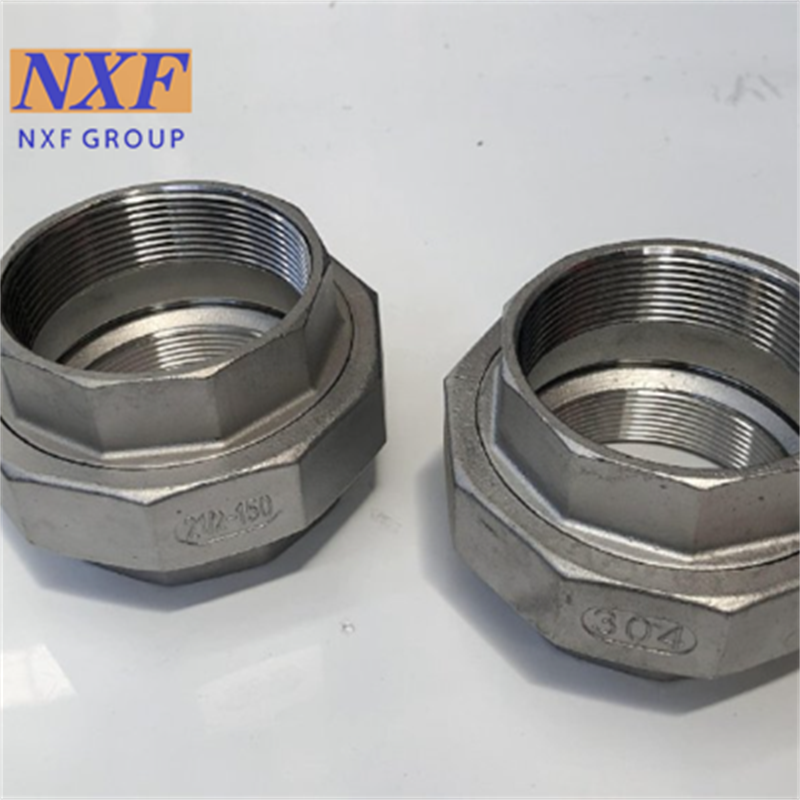




Thread UnionProduct Processing
1. Raw Material InspectionRaw material is ZeCor-310M bar stock. Verify material certificates, perform spectrum test for chemical composition and mechanical properties. Mark heat numbers for full traceability.
2. CuttingCut billets for male end, female end and union nut separately according to drawings. Remove burrs and scale, reserve machining and forging allowance.
3. Heating and Closed Die ForgingHeat billets to specified forging temperature, forge male end, female end and nut blanks separately by closed die forging, control parameters to achieve uniform and dense grain structure.
4. Heat TreatmentSolution treatment is carried out in accordance with dedicated ZeCor-310M procedure to release forging stress and stabilize high-temperature and corrosion resistance.
5. Shot BlastingRemove scale and forging contaminants from blank surface by shot blasting.
6. Precision MachiningCNC turning for NPT tapered threads, sealing face and outer profile. Strictly control thread form accuracy, sealing surface roughness and dimensional tolerance to ensure assembly accuracy.
7. Pre-assembly TestAssemble male end, female end and nut, check thread engagement and sealing face contact to avoid jamming and excessive sealing gap.
8. MarkingLaser marking of material, size, pressure class, heat number and standard number.
9. Finished Product InspectionDimensional check, visual inspection, hardness test, PT penetrant testing as required to detect surface defects.
10. Surface PassivationPassivation treatment to improve corrosion resistance.
11. Final Inspection & Document PreparationRecheck all test items, compile MTC, test reports and inspection records.
12. Packing and WarehousingPack the complete set with protective packing, classified storage with full quality documents attached.
Our NXF GROUP advantage as follow
2.Our NXF GROUP can strictly control the quality. We have production, quality inspection, warehousing and other departments to coordinate and control the quality,Such as PMI and size testing.
3.Our NXF GROUP biggest advantage is 3S service. Small quantity, short time, special materials.
4.Our NXF GROUP have excellent quality certificate system and trademark certificate.
5.Our NXF GROUP have a comprehensive after-sales service guarantee, such as the transaction guarantee provided by Alibaba International Station, as well as remote technical guidance and services.
6.Our NXF GROUP have a well-established logistics support system that can save you both time and money, providing you with a one-stop service.


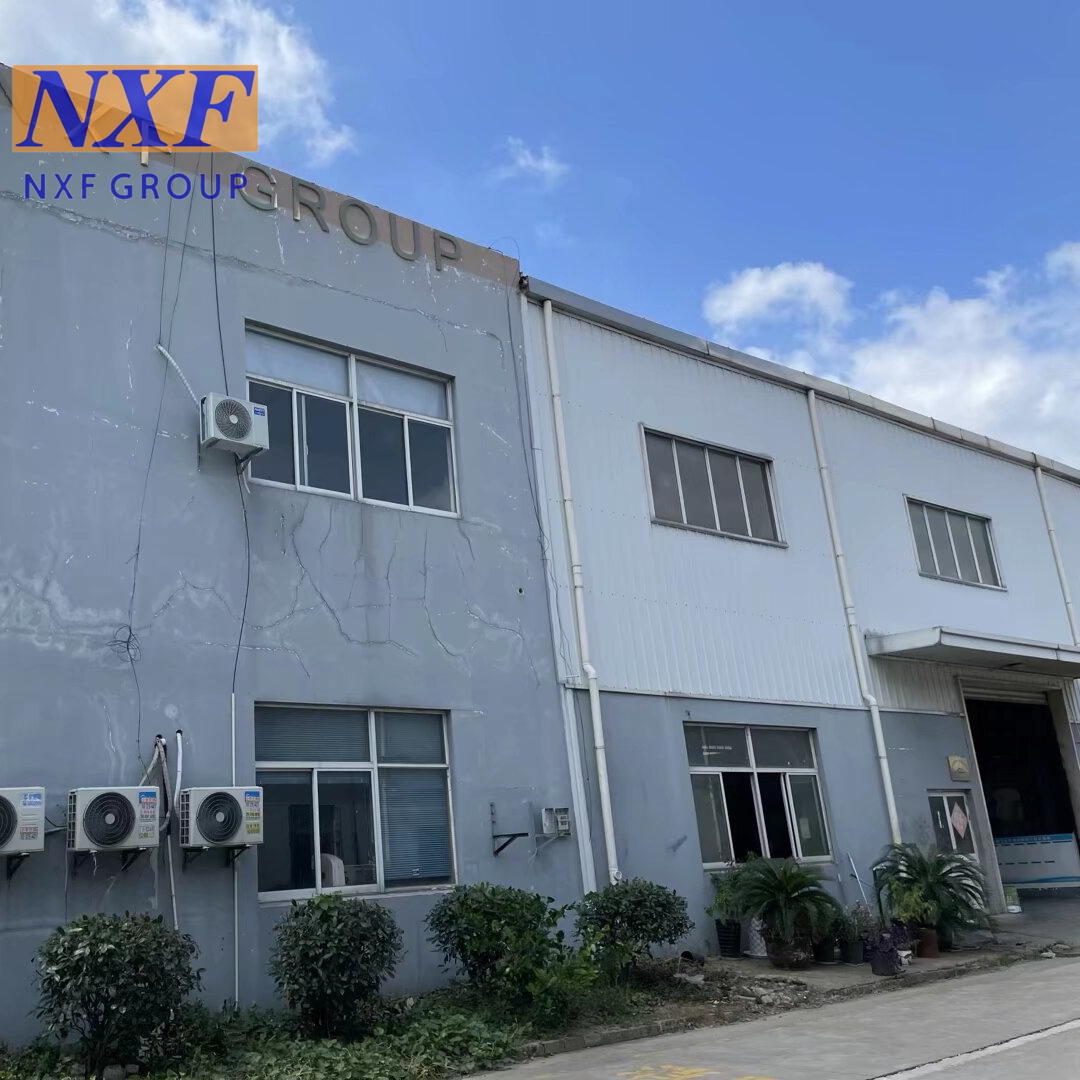
We are based in Jiangsu, China, start from 2021,sell to South Asia(30.00%),Eastern Asia(10.00%),Mid East(10.00%),Eastern Europe(10.00%),South America(10.00%),Domestic Market(5.00%),North America(5.00%),Northern Europe(5.00%),Central America(5.00%),Africa(5.00%),Southeast Asia(5.00%). There are total about 101-200 people in our office.
2. how can we guarantee quality?
Always a pre-production sample before mass production;
Always final Inspection before shipment;
3.what can you buy from us?
Pipe,Flange,Steel plate,Pipe fittings,Alloy products
4. why should you buy from us not from other suppliers?
Our advantage:
2.Our NXF GROUP can strictly control the quality. We have production, quality inspection, warehousing and other departments to coordinate and control the quality,Such as PMI and size testing.
3.Our NXF GROUP biggest advantage is 3S service. Small quantity, short time, special materials.
4.Our NXF GROUP have excellent quality certificate system and trademark certificate.
5.Our NXF GROUP have a comprehensive after-sales service guarantee, such as the transaction guarantee provided by Alibaba International Station, as well as remote technical guidance and services.
6.Our NXF GROUP have a well-established logistics support system that can save you both time and money, providing you with a one-stop service.
5. what services can we provide?
Accepted Delivery Terms: FOB,CFR,CIF,EXW,FCA,DDP,DDU;
Accepted Payment Currency:USD,EUR,CAD,HKD,CNY;
Accepted Payment Type: T/T,L/C,D/P D/A,Credit Card,PayPal;
Language Spoken:English,Chinese,Spanish,Russian