

Phone/Whatsapp:+8613917160311
Email: info@nxf-group.com
Email: Andrew@nxf-group.com
Email: Alice@nxf-group.com
NXF UNS N10276 2.4819/NiMo16Cr15W/C276 OD DN15-1200 Pressure Class150-2500lb Nickel Alloy Forging Technology Paddle Blind Flange
Super alloys have good oxidation and creep resistance and can be strengthened by precipitation hardening, solid-solution hardening and work hardening methods. They can also function under high mechanical stress and high temperatures and also in places that require high surface stability. HASTELLOY(r) C276 is a wrought corrosion-resistant alloy that resists the development of grain boundary precipitates that degrade corrosion resistance.
The following datasheet provides an overview of HASTELLOY(r) C276.
C276 Forging Technology Paddle Blind Flange Introduction


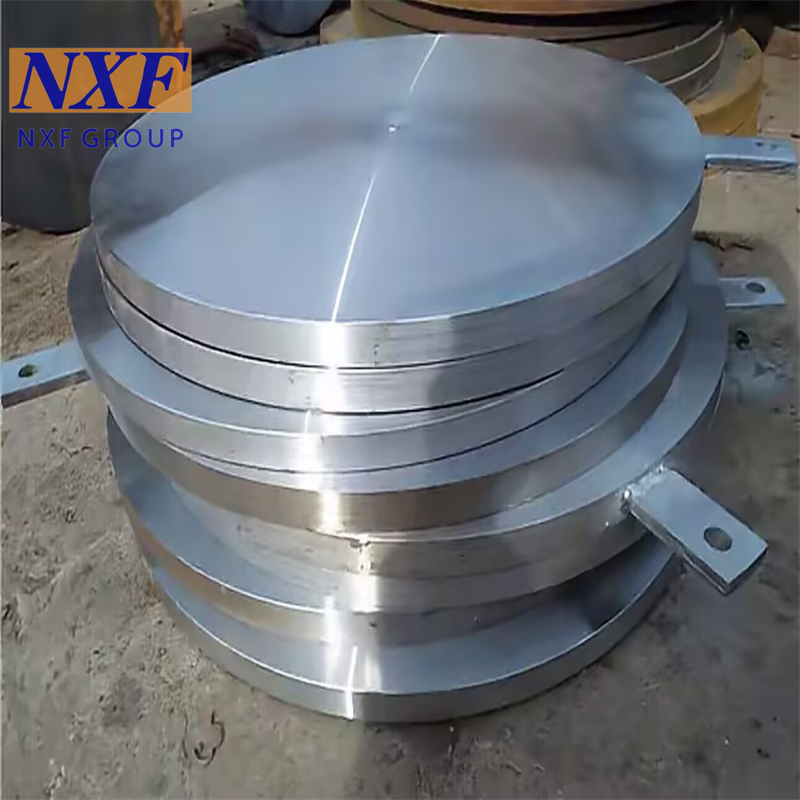

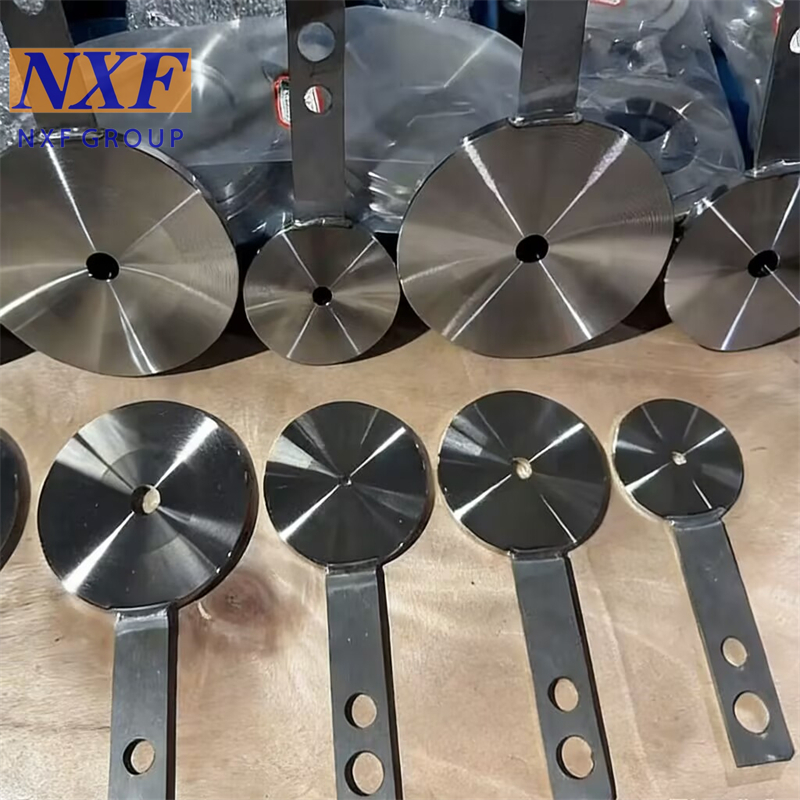


C276 Forging Technology Paddle Blind Flange Product Processing
1. Material selection: Select carbon steel, stainless steel or nickel-based alloy materials based on the working conditions. Verify the material certificates and confirm that the element content meets the standards through component testing to ensure that the raw materials have no cracks, slag inclusions, etc.
2. Cutting and blanking: Precisely cut the raw materials according to the order specifications. Use CNC cutting equipment to cut the inserts and the matching flange rings blanks, control the dimensional accuracy, and reduce the subsequent processing allowance.
3. Forming processing: Forge or machine the blanks to shape the main body of the insert and the flange ring outline. Focus on processing the sealing surface of the insert to ensure a smooth surface without burrs.
4. Precision machining: Use CNC equipment to process key parts such as bolt holes and sealing grooves, strictly following ASME B16.5 and other standards to ensure precise cooperation between the insert and the flange ring and the compliance of the sealing fit.
5. Heat treatment and inspection: Perform heat treatment on the formed parts to eliminate internal stress from the processing. Then, conduct non-destructive testing, size re-measurement, and defect inspection. After passing the inspection, perform surface rust prevention treatment, package for delivery, and attach the inspection report.
2.Our NXF GROUP can strictly control the quality. We have production, quality inspection, warehousing and other departments to coordinate and control the quality,Such as PMI and size testing.
3.Our NXF GROUP biggest advantage is 3S service. Small quantity, short time, special materials.
4.Our NXF GROUP have excellent quality certificate system and trademark certificate
5.Our NXF GROUP have a comprehensive after-sales service guarantee, such as the transaction guarantee provided by Alibaba International Station, as well as remote technical guidance and services.
6.Our NXF GROUP have a well-established logistics support system that can save you both time and money, providing you
with a one-stop service.


We are based in Jiangsu, China, start from 2021,sell to South Asia(30.00%),Eastern Asia(10.00%),Mid East(10.00%),Eastern Europe(10.00%),South America(10.00%),Domestic Market(5.00%),North America(5.00%),Northern Europe(5.00%),Central America(5.00%),Africa(5.00%),Southeast Asia(5.00%). There are total about 101-200 people in our office.
2. how can we guarantee quality?
Always a pre-production sample before mass production;
Always final Inspection before shipment;
3.what can you buy from us?
Pipe,Flange,Steel plate,Pipe fittings,Alloy products
4. why should you buy from us not from other suppliers?
Our advantage:3S Service (Small Quantity/Short Time/Special Material) We have our own factories, quality can be controlled seriously.We Specialize in manufacturing about 21 years.We have professional testing department and testing equipment.
5. what services can we provide?
Accepted Delivery Terms: FOB,CFR,CIF,EXW,FCA,DDP,DDU;
Accepted Payment Currency:USD,EUR,CAD,HKD,CNY;
Accepted Payment Type: T/T,L/C,D/P D/A,Credit Card,PayPal;
Language Spoken:English,Chinese,Spanish,Russian