

Phone/Whatsapp:+8613917160311
Email: info@nxf-group.com
Email: Andrew@nxf-group.com
Email: Alice@nxf-group.com


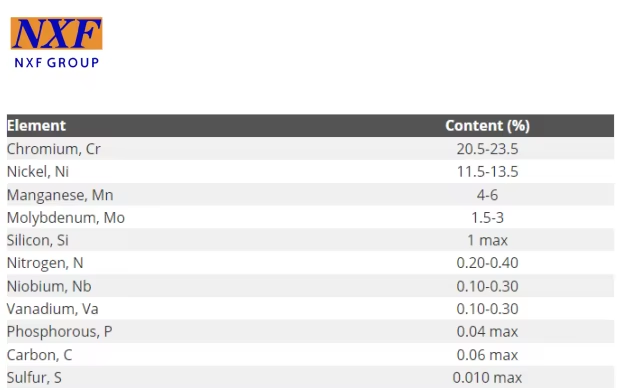
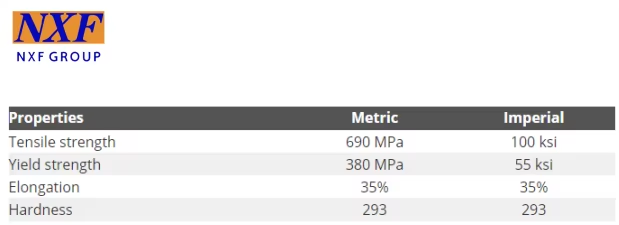
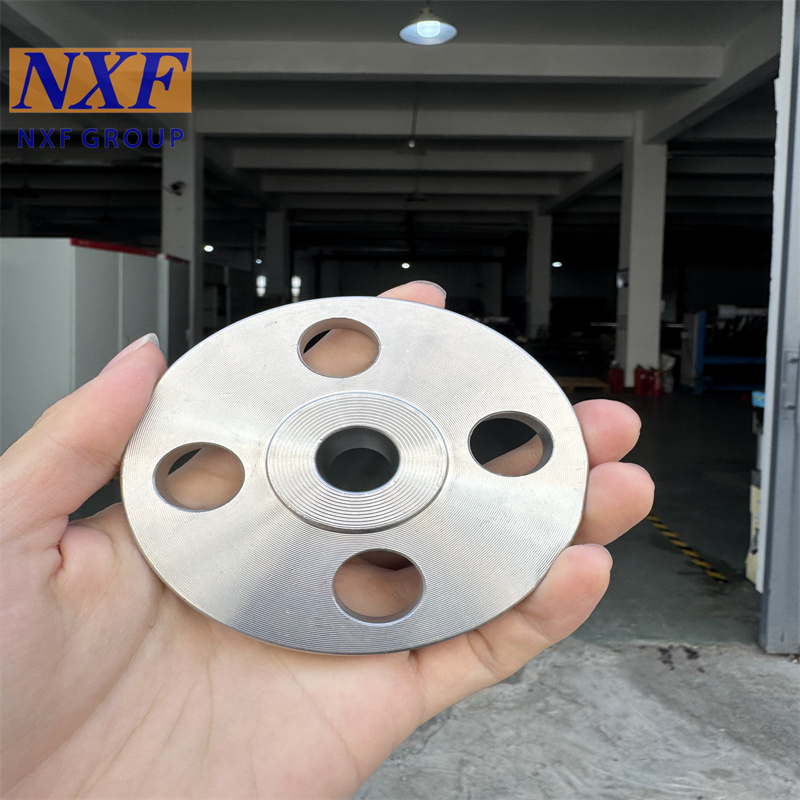
NXF UNS S20910 XM-19 Diameter DN15-1200 Pressure 150-2500lb Special Stainless Steel Forged Welding Neck Flanges
Weld Neck Flanges (also known as WN flanges or high-hub flanges) are premium pipe connection components designed for severe service conditions involving high pressure, extreme temperatures, cyclic loading, or hazardous materials. Characterized by their long, tapered hub and butt-welded connection to pipes, they provide superior strength, stress distribution, and leak prevention compared to other flange types.
magneticpermeability of this alloy allows it to be used as a material for medical implants.
Machinability
Stainless steel grade UNS S20910 XM-19 has machinability characteristics that are similar to other austenitic stainless
steels;however it requires slower speeds, more power, and higher rigidity due to its high work hardening rate. It is recommended that coated carbide tooling be used.
Forming
Stainless steel grade UNS S20910 XM-19 can be formed using the same methods applied for other austenitic stainless steels. More power for forming and forging is needed for this alloy. Forging can be done at 1177-1204°C (2150-2200°F).
Welding
Welding of stainless steel grade UNS S20910 XM-19 can be performed using traditional joining processes. Recommended filler metal should be UNS S20910 XM-19 (AWS E/ER209).
Caution should be taken while using autogenous, high power density joining processes such as EB or laser welding, due to low FN potential and severe outgassing possibility.
Heat Treatment
Final annealing process performed for several of the applications, is done at 1065°C (1950°F), which is followed by water
quenching. In case this material is used in a strongly corrosive environment, annealing should be done at 1121°C (2050°F). This alloy cannot be hardened by heat treatment.






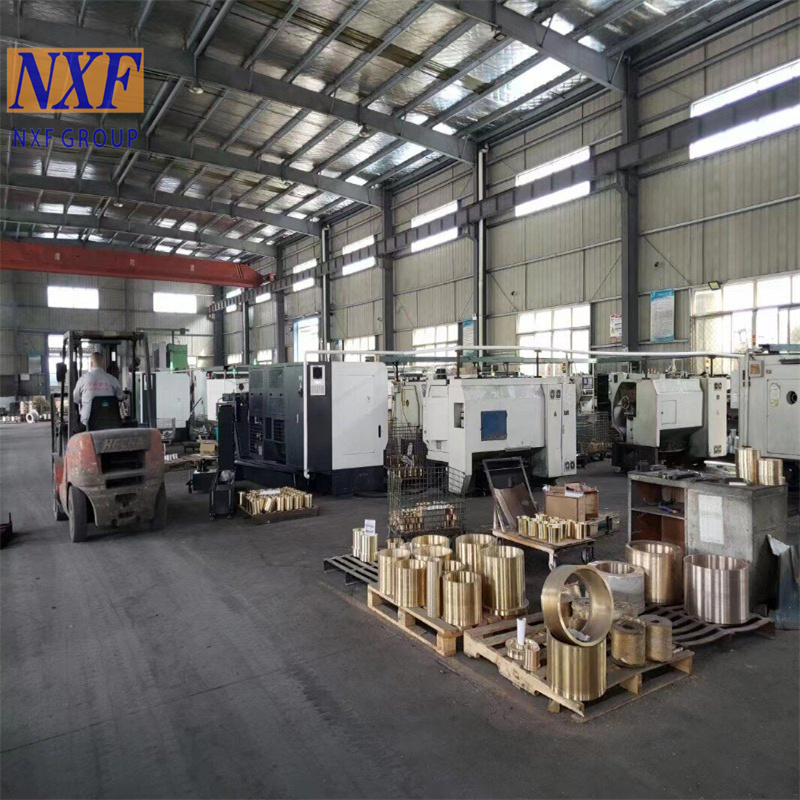
Product processing
1. Raw Material PreparationMaterial Selection: Round or square steel billets are typically used. The material depends on the working conditions, commonly including carbon steel (A105), stainless steel (304/316L), or alloy steel.Blanking: Based on the weight (including losses) of the target flange, the steel is cut into billets using a saw.Physical and Chemical Testing: The materials provided by the steel mill must be accompanied by a Material Quality Report (MTR). The manufacturer will conduct spectral analysis to verify the chemical composition and ensure that the strength meets the standards.
2. Heating & Forging – The Most Critical StepHeating: The steel billet is placed in an industrial furnace (such as an induction furnace or gas furnace) for heating. Carbon steel is typically heated to 1000°C - 1200°C to achieve a plastic state.Die Forging/Free Forging:Die Forging: The red-hot steel billet is placed in a special die and subjected to intense impact through a forging press. Metal flows within the mold cavity, forming the flange and raised conical neck in a single process. Flanges produced using this method exhibit good grain flow and the highest strength.Rolling: For large-diameter weld neck flanges, holes are punched first, then the diameter is enlarged and the shape is pressed out using a rolling mill.Trimming and Punching: The flash generated during forging is removed, and a center hole is punched.
3. Heat TreatmentNormalizing/Annealing: Forging generates internal stress. By reheating the flange to a specific temperature and slowly cooling it, internal stress can be eliminated, internal grains refined, and the toughness and hardness uniformity of the metal improved.Solution Treatment: For stainless steel flanges, solution treatment is necessary to restore corrosion resistance.
4. MachiningRough Machining: Using a large vertical or horizontal CNC lathe, the oxide scale on the forging surface is removed, and the outer diameter and thickness of the flange are roughly machined.Fine Machining of the Conical Neck (Hub): This is the hallmark of a weld neck flange. A smooth, long, tapered bevel is machined for pipe connections.Facing: The flange is machined into a raised face (RF), flat face (FF), or ring face (RTJ) as required.For RF faces, tiny serrated lines (water lines) are cut to enhance the gasket's sealing effect.Drilling Bolt Holes: Using a dividing head or CNC drilling machine, evenly distributed bolt holes are precisely drilled on the flange.
5. BevelingA welding bevel is machined at the end of the tapered neck.This facilitates deep, full-penetration welding by creating a V-groove between the flange and the pipe during on-site installation.
6. Surface Treatment & InspectionCleaning and Rust Prevention: Carbon steel flanges are sandblasted to remove rust, then coated with rust-preventive oil, painted (yellow/black), or hot-dip galvanized. Stainless steel flanges undergo pickling and passivation.Flaw Detection: For flanges used in high-pressure environments, ultrasonic (UT) or magnetic particle (MT) testing is performed to ensure there are no forging cracks or porosity inside.Marking: The specifications, pressure rating, standard, material, and heat number are stamped on the flange edge using steel stamps.
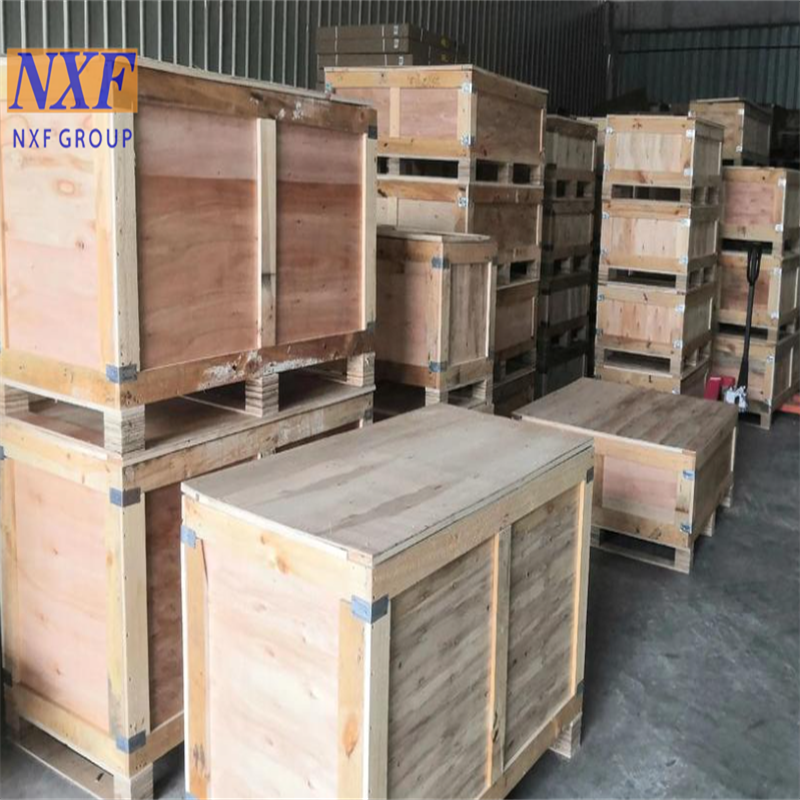
7. PackagingThe flange sealing surfaces and bevels are very delicate and are fitted with plastic protective caps, finally packed into wooden crates to prevent damage during transportation.Do you need tolerance requirements for a specific standard (such as ASME B16.5), or do you want to see welding alignment techniques?
2. We can strictly control the quality. We have production, quality inspection, warehousing and other departments to coordinate and control the quality.Such as PMI testing
3. Our biggest advantage is 3S service. Small quantity, short time, special materials.
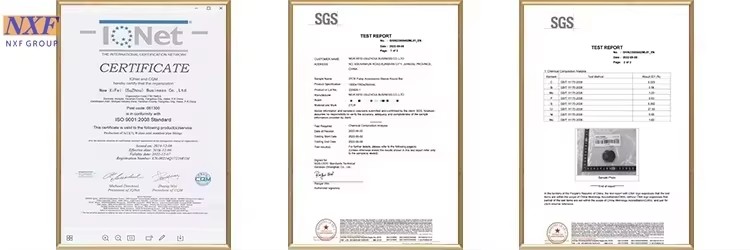
4.We have excellent quality certificate system and trademark certificate
5.We have a comprehensive after-sales service guarantee, such as the transaction guarantee provided by Alibaba International Station, as well as remote technical guidance and services.
6.We have a well-established logistics support system that can save you both time and money, providing you with a one-stop service.



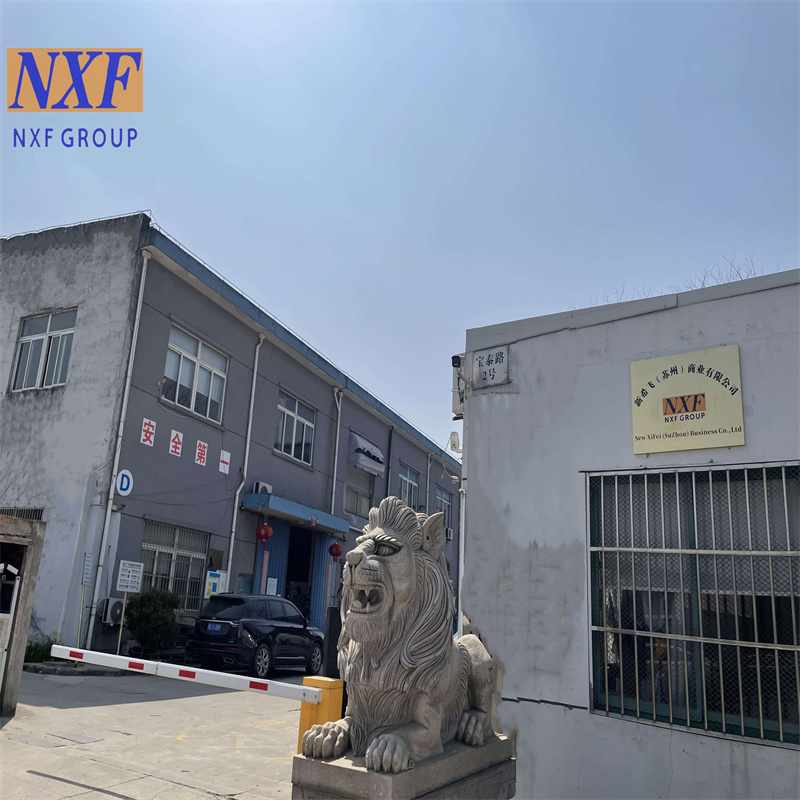
Established in 1980, XIFEI has been working diligently ever since to embrace the needs of our global customer base.We work to ensure absolute customer satisfaction. Our team has dedicated itself to perfecting our three core components, "Service, Management and Craftsmanship."
Our advantage as follow:
1.We have our own factory, and we can control the cost by producing by ourselves. We have a great advantage in price and can give you the lowest price.
2. We can strictly control the quality. We have production, quality inspection, warehousing and other departments to coordinate and control the quality.Such as PMI testing
3. Our biggest advantage is 3S service. Small quantity, short time, special materials.
4.We have excellent quality certificate system and trademark certificate
5.We have a comprehensive after-sales service guarantee, such as the transaction guarantee provided by Alibaba International Station, as well as remote technical guidance and services.
6.We have a well-established logistics support system that can save you both time and money, providing you with a one-stop service.



East(10.00%),Eastern Europe(10.00%),South America(10.00%),Domestic Market(5.00%),North America(5.00%),Northern
Europe(5.00%),Central America(5.00%),Africa(5.00%),Southeast Asia(5.00%). There are total about 101-200 people in our office.
2.how can we guarantee quality?
Always a pre-production sample before mass production;
Always final Inspection before shipment;
3.what can you buy from us?
Pipe,Flange,Steel plate,Pipe fittings,Alloy products
4. why should you buy from us not from other suppliers?
Our advantage:3S Service (Small Quantity/Short Time/Special Material)
We have our own factories, quality can be controlled seriously.
We Specialize in manufacturing about 21 years.
We have professional testing department and testing equipment.
5. what services can we provide?
Accepted Delivery Terms: FOB,CFR,CIF,EXW,FCA,DDP,DDU;
Accepted Payment Currency:USD,EUR,CAD,HKD,CNY;
Accepted Payment Type: T/T,L/C,D/P D/A,Credit Card,PayPal;
LanguageSpoken:English,Chinese,Spanish,Russianlding Machine


total 0 Sheet,Only 5 images can be uploaded, each less than 5m.